By Princewill Ubani · Published
Research ID: PA-ART-libya-great-man-made-river-project
Libya's Great Man-Made River, the World's Largest Irrigation Project
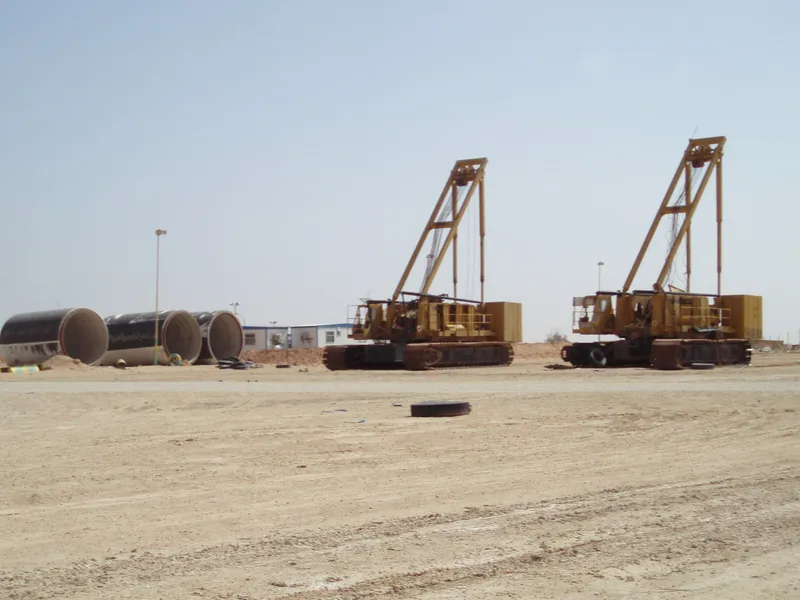
Beneath Libya’s stretch of the Sahara lies one of the largest known reserves of fresh water on the continent, fossil water laid down tens of thousands of years ago when the region’s climate was far wetter, trapped in sandstone aquifers that stretch across Libya, Chad, Egypt and Sudan. Muammar Gaddafi’s government set out to tap it on an industrial scale, launching the Great Man-Made River Project in 1984 to pipe that ancient water hundreds of miles north to the coastal cities where most Libyans actually live.
The engineering scale involved is difficult to overstate. The project draws water from wells sunk deep into the Nubian Sandstone and Kufra aquifer systems in Libya’s south, then moves it through a network of precast concrete pipes, some more than 13 feet in diameter, laid underground across hundreds of miles of desert to reach Tripoli, Benghazi, Sirte and other population centers along the Mediterranean coast. Research collected in the 2025 volume Water Resources of Libya, published by Springer Nature, describes the completed network as designed to deliver several million cubic meters of water daily, a capacity that let Gaddafi’s government promote it, without much exaggeration, as the largest civil engineering project underway anywhere in the world at the time.
The scheme’s ambitions extended beyond drinking water. Libyan officials framed it as a tool for greening the country’s northern desert fringe and expanding irrigated agriculture, and the project earned enough international attention that UNESCO, in 1999, accepted Libya’s offer to fund and administer a Great Man-Made River International Water Prize, an award recognizing scientific research on water management in arid regions, a rare instance of the Gaddafi government underwriting an international scientific honor rather than merely receiving criticism from international bodies.
The 2011 NATO intervention that helped topple Gaddafi’s government also damaged the infrastructure Libya had spent decades building, with reports at the time describing NATO strikes hitting a factory manufacturing pipes for the network and other project facilities coming under fire during the conflict, disruptions that Libya’s subsequent political fragmentation has made difficult to fully repair. More than a decade on, the network remains Libya’s primary source of fresh water for its coastal population, an engineering legacy of the Gaddafi era that outlasted the government that built it, even as maintaining a system spanning thousands of miles of pipeline has grown harder amid the country’s ongoing instability.
Sources
- “Great Man-Made River (GMR)”, Encyclopaedia Britannica.
- “What's next for Libya's Great Man-Made River Project?”, Middle East Institute.
Books & Further Reading
Salah Hamad Fawzi Saeid, "The Great Man-Made River Project in Libya: An Overview of the Current Status and Future Prospects," in Water Resources of Libya (Springer Nature, 2025), ISBN 978-3-031-80919-4