By Princewill Ubani · Published
Research ID: PA-ART-fidel-castro-death-cuba-africa-solidarity
Fidel Castro's Death and Cuba's Cold War Solidarity With Africa
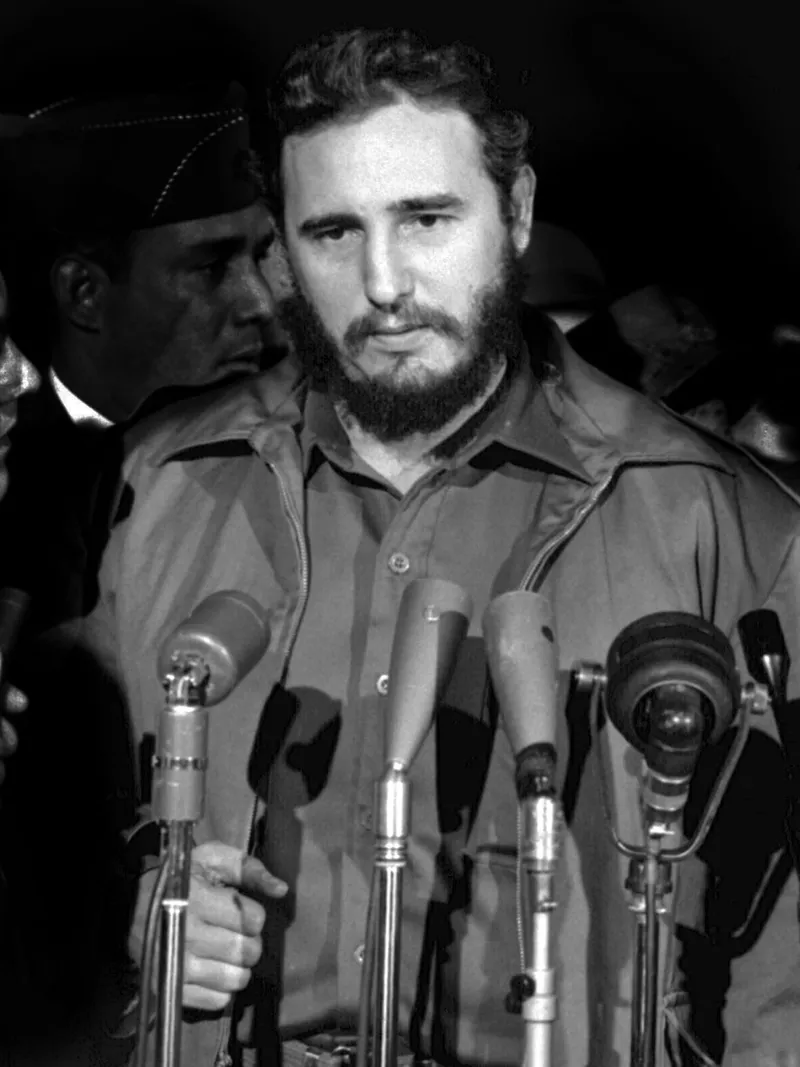
Fidel Castro died in Havana on November 25, 2016, at the age of 90. His brother and successor, Raúl Castro, announced the death on Cuban state television that night, and Cuba declared nine days of official mourning ahead of a mass memorial rally held at Havana’s Plaza de la Revolución on November 29, followed by a private funeral and burial in Santiago de Cuba on December 4. Cuban intelligence officials had long claimed Castro survived hundreds of assassination attempts over his decades in power, a figure most often cited as 634, attributed to Fabián Escalante, the former head of Cuba’s state security service. The number has never been independently verified and comes solely from Cuban government sources, though it is consistently repeated across international coverage of his death.
Castro’s death drew a heavier wave of mourning across Africa than in most of the world, rooted in Cuba’s Cold War-era military role on the continent. Beginning in 1975, Cuba sent tens of thousands of troops to Angola in support of the newly independent country’s government against South African-backed forces, an intervention covered in depth elsewhere on this site (see “Operation Carlota” and “Cuba’s Military Intervention in Angola, 1975-1988”). That commitment culminated in the 1987-88 battle of Cuito Cuanavale in southeastern Angola, the largest conventional military engagement on the continent since the Second World War, fought between Cuban, Angolan and Soviet-backed forces on one side and the South African Defence Force and UNITA on the other. The battle ended with South Africa agreeing to withdraw from Angola and Namibia, an outcome Nelson Mandela later credited directly: “The defeat of the racist army made it possible for the people of Namibia to achieve their independence.” Namibia became independent in March 1990. Cuba’s involvement in Africa was not limited to Angola; the government also sent thousands of doctors and medical workers to African countries in the decades that followed, an engagement it continued into the 2014 Ebola response in West Africa.
That history shaped how African leaders responded to Castro’s death. South African president Jacob Zuma traveled to Havana for the memorial rally, telling mourners that “the deep and undying special relationship between Cuba and Africa was cemented by the blood of heroic Cuban soldiers.” African Union Commission chairperson Nkosazana Dlamini-Zuma praised Castro for “investing in his people, particularly in healthcare and education,” extending the same framing to Cuba’s assistance abroad. Zimbabwe’s Robert Mugabe also traveled to Havana to attend the memorial rally, joining a broader continental outpouring that was, by most contemporary accounts, markedly more uniform and positive than the sharply divided reaction in the United States and parts of Europe.
That near-uniform praise sat alongside a more complicated record that received far less attention in African coverage of his death: at home, Castro ran Cuba for nearly five decades as a one-party state that jailed political dissidents and restricted press freedom, a domestic legacy distinct from, and far more contested than, his government’s military and medical engagement with Africa.
Sources
- “"Fidel Castro (1926-2016) and Global Solidarity," Third World Quarterly (Taylor & Francis)”.
- “Former Cuban leader Fidel Castro dies”, CNN.
- “Seven of the most bizarre CIA assassination attempts on Fidel Castro”, NBC News.
- “Fidel Castro's Greatest Legacy in Africa Is in Angola”, Chatham House.
- “It's 30 years since Cuito Cuanavale. How the battle redefined southern Africa”, The Conversation.
- “Castro's death casts light on Africa's relationship with its diaspora”, Institute for Security Studies (ISS Africa).
- “President Jacob Zuma attends funeral of the late President Fidel Castro”, South African Government.
- “Mugabe must learn from Castro and pass on the baton”, Africanews.
Books & Further Reading
Sabella Ogbobode Abidde and Charity Manyeruke (eds.), Fidel Castro and Africa's Liberation Struggle (Lexington Books, 2020, ISBN 9781793611451)