By Princewill Ubani · Published
Research ID: PA-ART-cudjo-lewis-last-clotilda-survivor
Cudjo Lewis, the Last Known Survivor of the Transatlantic Slave Trade
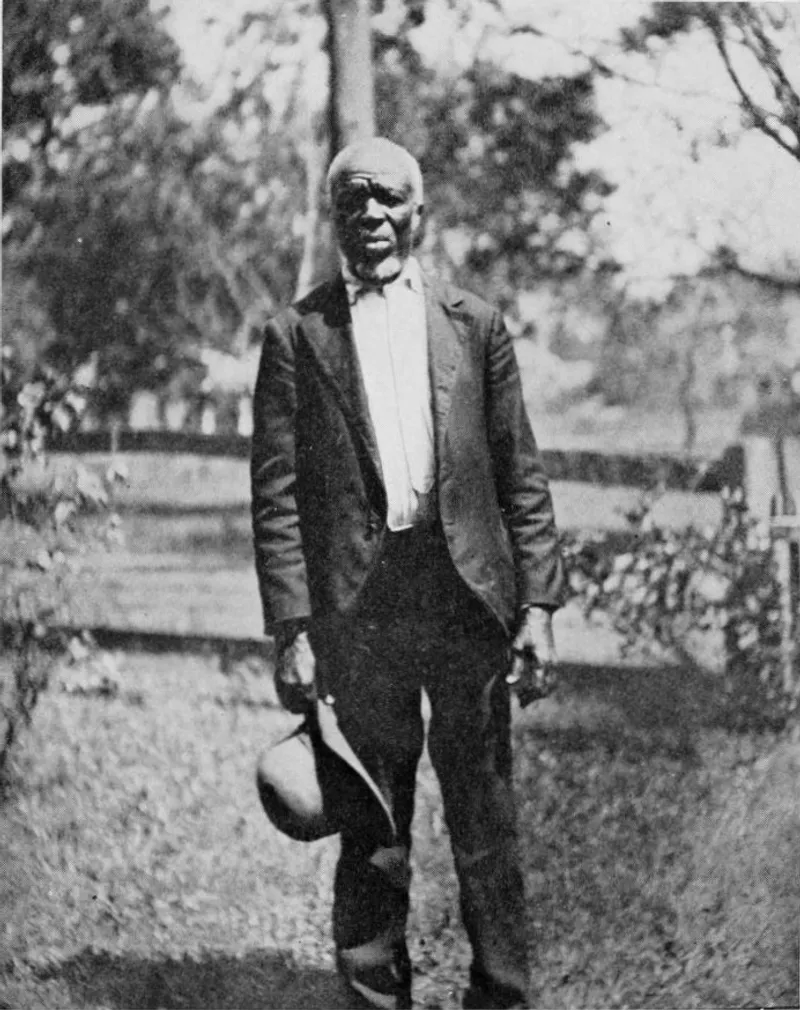
Oluale Kossola was around 19 years old when Dahomey raiders captured him and roughly 120 others from his home village, in what is now Benin, and sold them to American slave traders. He was forced aboard the Clotilda, a ship that carried its captives to Mobile, Alabama, in 1860, just a year before the Civil War began, and more than five decades after Congress had formally banned the importation of enslaved people into the United States. The Clotilda’s voyage stands as the last documented instance of that illegal trade reaching American shores.
Kossola, who took the name Cudjo Lewis in the United States, spent roughly five and a half years enslaved in Alabama before Union soldiers informed him and the Clotilda’s other survivors that they were free at the end of the Civil War. Rather than returning to West Africa, a passage none of them could arrange, Lewis and other formerly enslaved Clotilda survivors pooled resources to buy land near Mobile, founding a community that became known as Africatown, a settlement that preserved distinct West African cultural and linguistic traditions among its founders long after emancipation.
More than six decades after the abolition of slavery, the writer and anthropologist Zora Neale Hurston tracked down Lewis, by then one of the last living survivors of the Clotilda, and conducted a series of interviews with him in the early 1930s. Hurston struggled for years to find a publisher willing to print the manuscript, in part because she had preserved Lewis’s own dialect and speech patterns rather than smoothing them into standard English, a choice publishers of the era resisted. The manuscript went unpublished during Hurston’s lifetime; it finally appeared in 2018 as “Barracoon: The Story of the Last ‘Black Cargo,’” giving Lewis’s own account of capture, the Middle Passage, enslavement and emancipation a wide readership for the first time nearly a century after he first told it.
Lewis died in 1935, but Africatown, the community he helped found, still exists in Mobile today, and the wreck of the Clotilda itself was positively identified in the Mobile River in 2019, more than 150 years after it was deliberately burned and sunk by its owner in an attempt to destroy evidence of the illegal voyage. Together, Lewis’s firsthand testimony and the ship’s physical remains give the last chapter of the legal transatlantic slave trade to the United States a documented specificity that few other individual stories from that trade can match.
Sources
- “One of the Last Slave Ship Survivors Describes His Ordeal in a 1930s Interview”, History.com.
- “Zora Neale Hurston's 'Barracoon' Tells the Story of the Slave Trade's Last Survivor”, Smithsonian Magazine.