By Princewill Ubani · Published
Research ID: PA-ART-1433040509983920130
The CIA's 1978 Assessment of the Kenyatta Family's Wealth
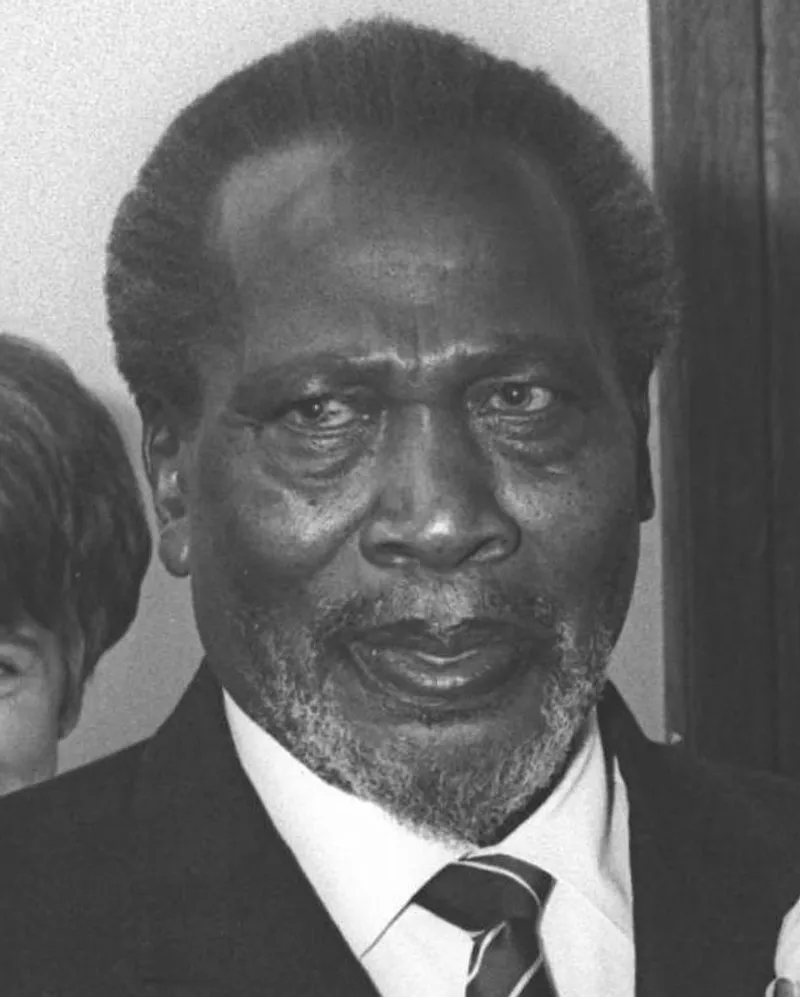
Jomo Kenyatta died on August 22, 1978, after nearly 15 years leading Kenya, first as prime minister from independence in December 1963 and then as its first president, and within days the CIA had put together an unusually detailed accounting of what his family actually owned. The assessment, titled “The Economic Stake of the Kenyatta Family; The Royal Family Jewels,” ran in the agency’s Africa Review that September and laid out, name by name, the farms, plantations, hotels, casinos, and insurance, shipping and real estate holdings the family had built up over Kenyatta’s time in power.
The report’s central finding cut against the assumption that Kenyatta himself was the driving force behind the family’s fortune. By the CIA’s count, Kenyatta held only about a half-dozen properties, roughly 4,000 hectares of farmland concentrated in the Rift Valley and his home district of Kiambu. His wife, Ngina Kenyatta, known widely as Mama Ngina, held far more: at least 115,000 hectares, including a 13,000-hectare ranch in Kiambu, tea plantations at Matu and Mangu, sisal farms near the Tanzanian border, coffee holdings, resort property around Mombasa, and stakes in the country’s ruby mines. The report also flagged Mama Ngina and Margaret Kenyatta, Jomo’s daughter from his first marriage and a former Nairobi mayor and Kenyan ambassador, as among the largest traders in charcoal and, more seriously, illicit ivory.
The CIA’s interest went beyond simple curiosity about a foreign leader’s estate. Analysts were tracking how the family had acquired so much land in the first place, and the report pointed to funds that Britain and other foreign governments had provided specifically to buy out departing white settlers and redistribute their farms to landless Kenyans. Some of that money, the agency concluded, had instead gone toward acquiring land for the Kenyattas and their allies. The report also registered how much public resentment Mama Ngina’s wealth had generated by 1978, describing the business tactics behind it as unusually aggressive even by the standards of Kenya’s post-independence elite, and it weighed whether Kenyatta’s successor, Daniel arap Moi, might move to claw some of it back once he consolidated power.
That question outlived the report itself. Moi was sworn in as president that same day, and rather than dismantling the family’s holdings, presided over a Kenya in which the pattern the CIA had described, land and business wealth flowing to whoever controlled the state, repeated itself under new names. Decades later, investigations built on leaked financial records, including the 2021 Pandora Papers, would trace parts of the Kenyatta family’s fortune into an offshore network of companies and trusts, a throughline from the 1978 assessment that a small, well-connected group of investigators has kept documenting long after the CIA analysts who wrote it moved on to other countries.
Sources
Books & Further Reading
Charles Hornsby, Kenya: A History Since Independence (I.B. Tauris, 2012, ISBN 9781848858862)