
By Princewill Ubani · Published · Updated
Research ID: PA-ART-348375956777496576
Why Wodaabe Parents Traditionally Don't Speak Directly to Their Eldest Children
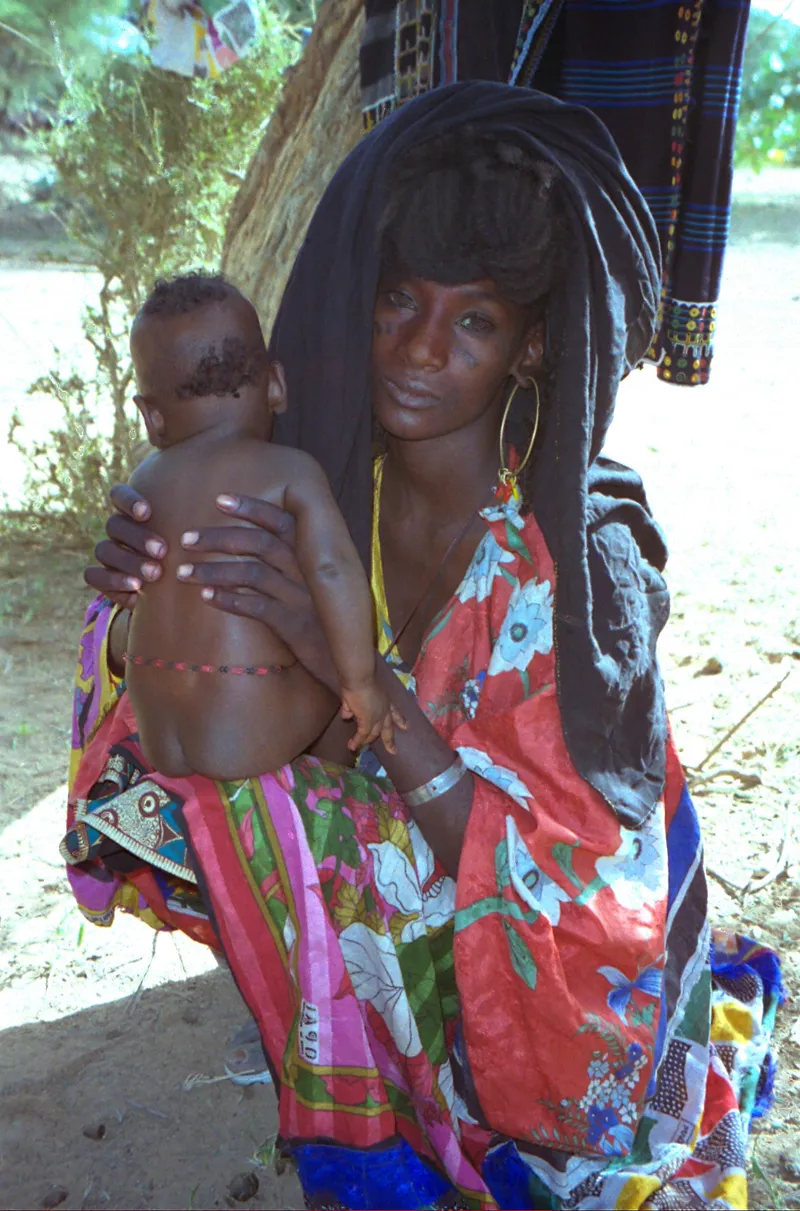
Among the Wodaabe, a pastoralist Fulani people who move with cattle herds across Niger, Chad, Nigeria and neighboring countries, a mother and father will often go years without speaking directly to their own oldest children. It is not estrangement. It is a rule, one of the clearest expressions of a code of behavior the Wodaabe call semteende, usually translated as reserve, modesty or restrained emotion, and it governs some of the most intimate relationships in Wodaabe family life.
The custom applies specifically to a couple’s first two children. Parents are expected to avoid addressing them directly, a form of avoidance speech that anthropologists have documented among Wodaabe communities alongside a broader set of restraint rules covering who may be named, touched or spoken to openly within a family. In practice, this often means the earliest and most formative caregiving for a first- or second-born child falls to grandparents rather than to the child’s own parents, who maintain that reserve as the children grow. The restraint is not read as coldness within Wodaabe communities. It reflects a value placed on emotional discipline in general, one strand of a wider behavioral code that anthropologist Derrick J. Stenning documented in his study of the Wodaabe pastoral Fulani of Nigeria’s western Bornu Province, describing a social world organized around lineage, herd management and a shared code of comportment that shaped daily conduct as much as ceremony.
Semteende does not stand alone. Wodaabe social life is organized around a small set of core values that together define what it means to live correctly: semteende for reserve, munyal for patience and endurance, hakkilo for care and forethought, and amana for loyalty. Direct-address avoidance toward firstborn children is one of the more visible ways semteende shows up in ordinary family life, sitting alongside a wider set of naming and speech taboos, including a longstanding restriction against pronouncing the names of one’s spouse or parents-in-law aloud, that runs through Fulani pastoralist communities more broadly.
The practice has persisted even as Wodaabe communities have become better known internationally for the Gerewol, the annual courtship festival where young men paint their faces and dance for the attention of women judges. Where the Gerewol plays out in public and has drawn tourists and photographers for decades, semteende operates almost entirely inside the family, in the quieter and less photographed discipline of a mother and father choosing, deliberately, not to speak.
Sources
- Derrick J. Stenning. “Savannah Nomads: A Study of the Wodaabe Pastoral Fulani of Western Bornu Province, Northern Region, Nigeria”, Oxford University Press for the International African Institute, 1959.
- Mette Bovin. “Nomads Who Cultivate Beauty: Wodaabe Dances and Visual Arts in Niger (ISBN 9789171064677)”, Nordic Africa Institute, 2001.
Books & Further Reading
Derrick J. Stenning, Savannah Nomads: A Study of the Wodaabe Pastoral Fulani of Western Bornu Province, Northern Region, Nigeria (Oxford University Press for the International African Institute, 1959; reprint LIT Verlag, ISBN 9783894738785)