
By Princewill Ubani · Published
Research ID: PA-ART-364445053952856064
When Quebec's Newspapers Advertised Enslaved Africans Alongside Real Estate
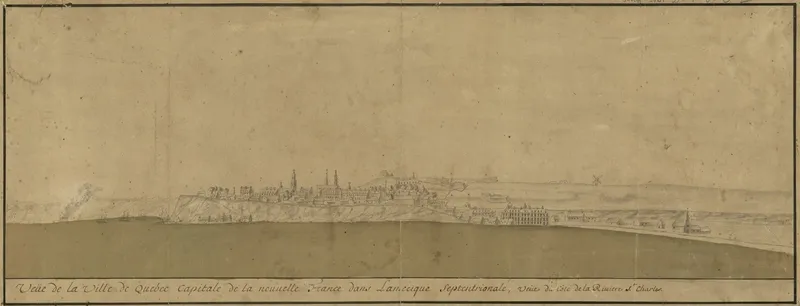
Slavery in Canada rarely fits the popular image of the country as a refuge at the end of the Underground Railroad, but for two centuries before abolition it was a documented, legally sanctioned practice, and Quebec’s own colonial newspapers carried its paper trail. From 1785, when the Montreal Gazette began publishing bilingually, researchers have documented a run of notices in it and in the Quebec Gazette offering enslaved men, women and children for sale, frequently listed in the same advertisement as farmland, livestock, furniture and other property, treating human beings as one more category of transferable estate.
The scale of the practice, largely hidden from popular memory until historian Marcel Trudel’s research forced a reckoning with it, was substantial. Trudel spent decades combing notarial records, parish registers and court documents to identify by name roughly 4,200 enslaved people held in New France and, after the British conquest, in Quebec, from the 17th century until abolition reached the British Empire in 1834. About two-thirds of those documented were Indigenous, most captured or purchased from Pawnee and other nations to the west and known in the colony’s own legal language as “panis,” while the remaining third were of African descent. Slaveholders ranged across colonial society, from governors and seigneurs to merchants, priests and bishops, a spread Trudel’s research laid out in granular, named detail that earlier historical narratives about New France as a settler society had largely left out.
The advertisements themselves followed a recognizable pattern that historian Charmaine A. Nelson has traced through the Quebec Gazette’s archive: notices, whether selling an enslaved person outright or seeking the return of one who had escaped, routinely described physical scars and markings, occupational skills and language ability in both English and French. A Gazette notice from 1786 described an enslaved man named Joe, a pressman fluent in both languages with scars visible on his legs; another from 1791 described a woman named Cloe, around 30 years old, who spoke English fluently and French with less confidence. Nelson has argued these advertisements amount to some of the most detailed surviving physical descriptions of enslaved Africans in North America, produced not to preserve their humanity but to make them easier to sell or recapture.
The practice continued in Quebec’s papers until slavery itself ended across the British Empire in 1834, closing out a chapter of Canadian history that ran for roughly two centuries and that Trudel’s research made it far harder to leave out of the country’s national story.
Sources
- “Canadian Fugitive Slave Advertisements: An Untapped Archive of Resistance”, Borealia (Canadian History & Early Modern World).
- “The story of Black slavery in Canadian history”, Canadian Museum for Human Rights.
- “Montreal Gazette”, The Canadian Encyclopedia.
Books & Further Reading
Marcel Trudel, translated by George Tombs, Canada's Forgotten Slaves: Two Hundred Years of Bondage (Véhicule Press, 2013, ISBN 9781550653274)