By Princewill Ubani · Published
Research ID: PA-ART-nyasaland-renamed-malawi-1964
Why Nyasaland Chose the Name Malawi at Independence
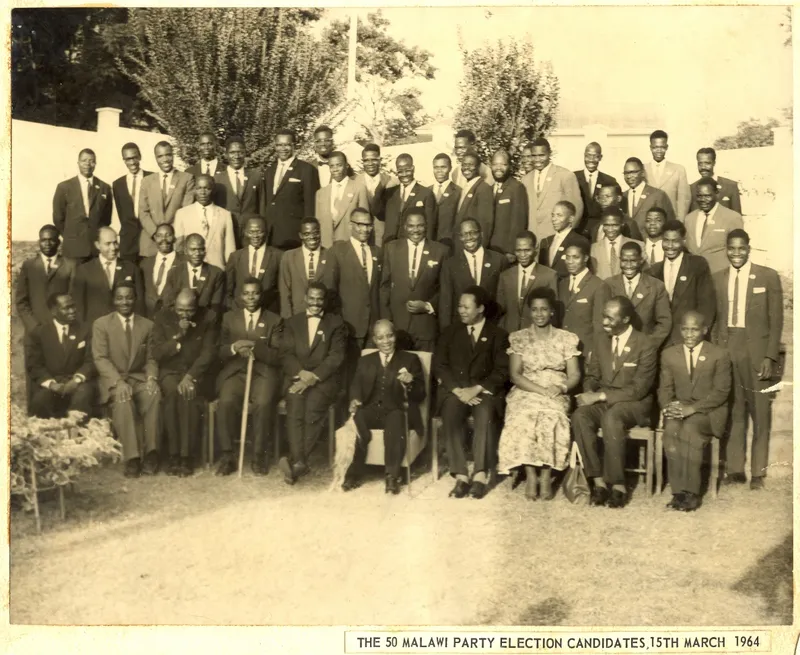
The territory Britain governed as the Nyasaland Protectorate became independent on July 6, 1964, and its new government dropped the colonial name that same day, choosing to call the country Malawi instead. The change closed out a name that had never described the land as its own people knew it: British administrators had first organized the territory as the Shire Highlands Protectorate in 1889, then reorganized it as the British Central Africa Protectorate in 1893, the name actually in place immediately before it was renamed Nyasaland in 1907, taking the name from Lake Nyasa, the vast Rift Valley lake forming much of the country’s eastern border, itself a name of contested colonial-era origin rather than a term the region’s inhabitants had chosen for themselves.
The decision to adopt Malawi instead came down to one man: Hastings Kamuzu Banda, the physician and nationalist leader who led the country to independence and would go on to rule it, eventually as self-declared president for life, until 1994, his life and rule covered in full in “Hastings Banda: Malawi’s Founding Father and Life President”. According to Philip Short’s 1974 biography “Banda,” written while Banda was still roughly a decade into his rule, Banda had come across the name on an old European map that marked a historical “Lake Maravi” somewhere in the region, associated with the Maravi confederacy, a set of related Chewa-speaking polities that had dominated much of the area for centuries before European colonization. Banda liked the sound of the word and decided it should replace Nyasaland, a choice that let the newly independent state trade a name imposed by British cartographers for one drawn, however loosely, from the region’s own precolonial past.
Banda had spent decades abroad by the time he made that choice, working as a physician in Britain and Ghana after leaving Nyasaland as a young man, and he returned home only in 1958 at the invitation of the Nyasaland African Congress to lead its campaign against British rule and against the Federation of Rhodesia and Nyasaland, an unpopular arrangement that had bound Nyasaland together with Southern and Northern Rhodesia under a government dominated by white settler interests. He became prime minister when the federation dissolved in 1963, then led Nyasaland into independence as Malawi the following July, taking the new country’s presidency in 1966 when it became a republic.
The renaming outlasted the man who chose it by decades. Malawi kept its independence-era name through Banda’s increasingly authoritarian one-party rule, through the multiparty transition that finally ended his presidency in 1994, and into the present day, one of a relatively small number of African nations whose modern name traces not to a British colonial designation but to a single postcolonial leader’s reading of an old map.
Sources
- “Hastings Kamuzu Banda”, Encyclopaedia Britannica.
- “Hastings Banda (ca. 1896-1997)”, BlackPast.
Books & Further Reading
Philip Short, Banda (Routledge & Kegan Paul, 1974, ISBN 9780710076311)