
By Princewill Ubani · Published
Research ID: PA-ART-muhammad-ali-vietnam-draft-refusal
Muhammad Ali's Conviction for Refusing the Vietnam War Draft
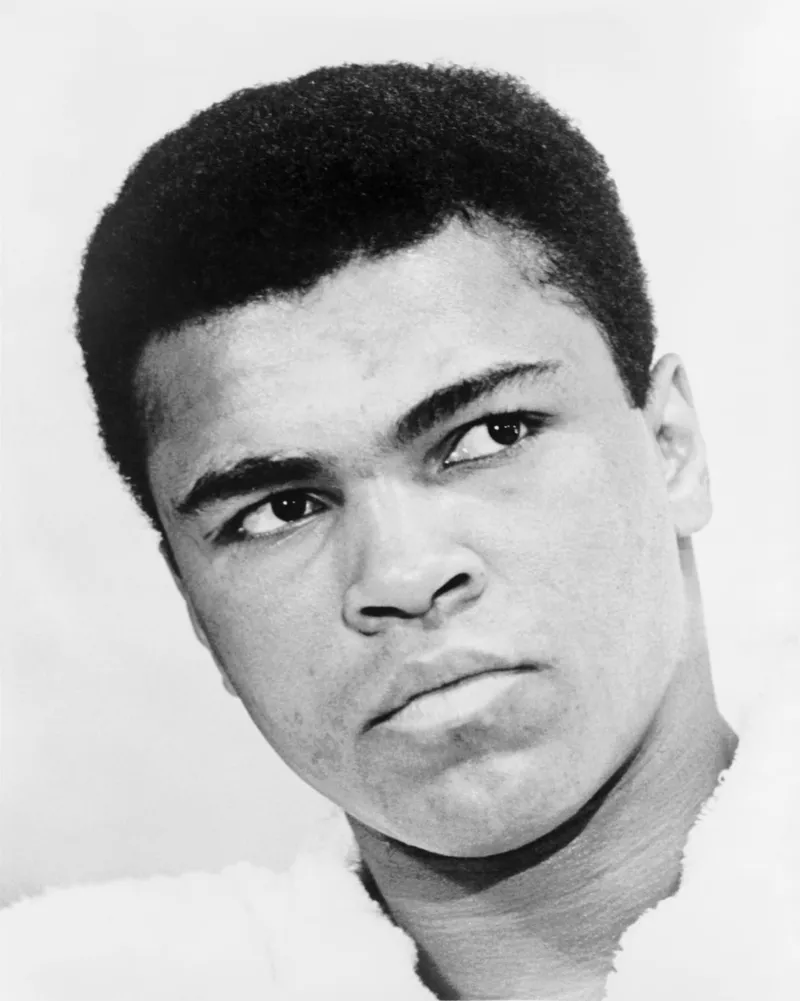
On April 28, 1967, Muhammad Ali reported to the Armed Forces Induction Center in Houston and refused to step forward when his name was called for induction into the United States Army. He was twenty-five, the reigning world heavyweight champion, and had converted to the Nation of Islam three years earlier, taking the name Muhammad Ali after winning the title from Sonny Liston in 1964. His refusal rested on that faith: Ali had applied for classification as a conscientious objector, arguing that his religious beliefs, and his standing as a minister within the Nation of Islam, forbade him from participating in war. His local draft board rejected the claim.
The consequences were immediate and sweeping. Within hours of his refusal, the New York State Athletic Commission suspended his boxing license and revoked recognition of his title; the World Boxing Association followed suit, and other state commissions did the same in the days after. Ali would not fight again for more than three and a half years, until a comeback bout against Jerry Quarry in October 1970. On June 20, 1967, an all-white jury in Houston took only about twenty minutes to convict him of violating the Selective Service Act. The judge imposed the maximum sentence available: five years in federal prison and a $10,000 fine. Ali remained free on appeal and never served time, but the ban cost him the core of his athletic prime, years he later said he could never get back.
Ali’s public stance went beyond the legal question of his own classification. He framed his refusal in terms that connected the war directly to race and empire, and he is widely remembered for the line that he had “no quarrel” with the Viet Cong, who had “never called me nigger.” Historians have since noted the phrase traces to an earlier civil-rights-era slogan and was only firmly attached to Ali years afterward, popularized by the 1977 film “The Greatest,” rather than clearly documented as something he said directly to reporters in 1967. That framing made him a lightning rod: reviled by much of the sporting press and general public at the time, but increasingly embraced by the antiwar movement and civil rights activists, including Martin Luther King Jr., who cited Ali’s stand when he came out publicly against the Vietnam War in 1967.
The case worked its way through the federal courts for four years. A Fifth Circuit appeals panel upheld the conviction, but the Supreme Court agreed to hear it as Clay v. United States. Oral arguments took place in April 1971, and internally the justices were reportedly initially inclined to affirm the conviction, until law clerks pointed out that the Justice Department’s own brief to the appeal board had rested on grounds even the government later conceded were mistaken: Ali’s objection to the Vietnam War specifically, rather than to all wars, had been wrongly used against him, and one of three grounds cited for denying his claim was legally invalid. On June 28, 1971, the Court ruled unanimously, 8-0, with Justice Thurgood Marshall recused because of his earlier role in the case as U.S. Solicitor General, to reverse the conviction on that narrow procedural ground: the appeal board had given no explanation for its denial, making it impossible to know whether it had relied on the flawed rationale. The ruling voided the prison sentence and fine and cleared the felony from his record, though it stopped short of endorsing his conscientious-objector claim on its merits.
By the time the decision came down, Ali had already been fighting again for eight months. What had been treated in 1967 as draft-dodging by a defiant celebrity was recast, in retrospect, as a principled, and ultimately legally sound, objection grounded in religious conviction.
Sources
- “Samuel O. Regalado, "'Clay, aka Ali v. United States' (1971): Muhammad Ali, Precedent, and the Burger Court"”, JSTOR / Journal of Sport History.
- “Clay v. United States, 403 U.S. 698 (1971)”, Cornell Law School Legal Information Institute.
- “The Supreme Court decision that saved Muhammad Ali's boxing career”, National Constitution Center.
- “Muhammad Ali (1942-2016)”, BlackPast.org.
- “Muhammad Ali”, Britannica.
Books & Further Reading
Jonathan Eig, Ali: A Life (Houghton Mifflin Harcourt, 2017, ISBN 9780544435247)