
By Princewill Ubani · Published
Research ID: PA-ART-348132300384509952
Sharo: The Fulani Rite Where Young Men Are Flogged Into Manhood
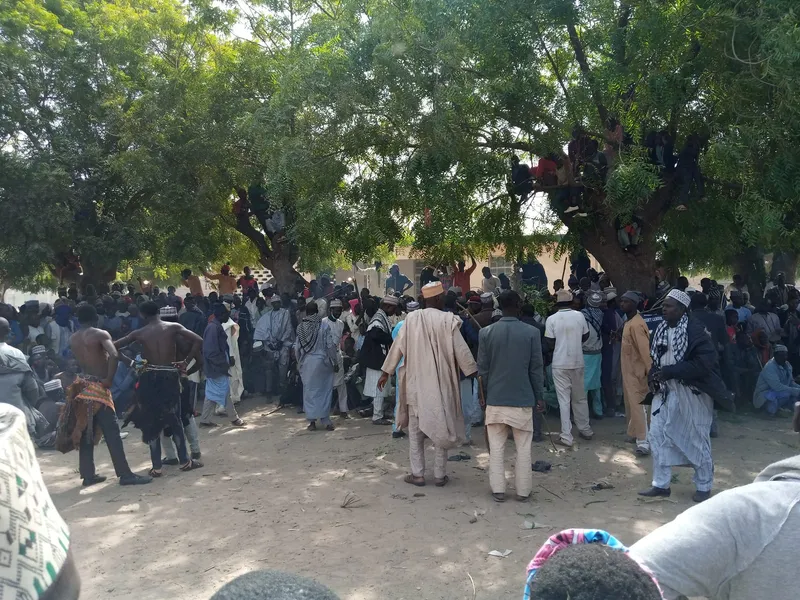
Among the Fulani, becoming a man has traditionally meant standing still while another man strikes you with a long, thin stick, in front of a crowd, and showing nothing but composure while it happens. The ceremony is called sharo, a word that translates roughly to flogging, and it remains a recognized rite of passage in parts of northern Nigeria.
The mechanics are simple and brutal. A young man steps forward to be flogged by another young man, often a rival from a different clan or village, using a long, flexible stick or cane. He is expected to absorb the blows without crying out, without flinching and, in the version of the ritual most often described by those who have witnessed it, without showing pain on his face at all. The most committed participants go further still, asking the flogger for additional strokes or smiling through the ordeal, both understood as ways of proving that the pain has no hold over them. A referee typically oversees each match to keep the contest from crossing into serious injury, though participants are still left with visible scarring by the end.
Sharo has traditionally been staged twice a year in many communities: once during the dry season, when the guinea corn harvest is in, and again around Id-el-Kabir, the Islamic festival of sacrifice. The ceremony draws crowds from well beyond the immediate community, since a young man’s performance under the flogging carries real social weight. Successfully enduring the ordeal has traditionally marked a young Fulani man as ready to marry, a milestone tied directly to how well he withstood the pain in public. The tradition sits inside a wider Fulani code of composure and reserve that shapes everyday life as much as ceremony, one that prizes stoicism as a mark of maturity from childhood onward.
The practice has drawn sustained criticism from health and human rights advocates who point to the injuries it causes, and some Nigerian authorities have discouraged or restricted it in various periods. It nonetheless persists in more rural Fulani communities, where sharo continues to function much as it always has: not as a spectacle staged for outsiders, but as the test a young man is expected to pass before his community will call him one.
Sources
- “At the Sharo festival of the Fulani, young men are flogged to show they have come of age and can marry”, Face2Face Africa.
- “The Sharo Festival of the Fulani”, The Guardian Nigeria.