
By Princewill Ubani · Published
Research ID: PA-ART-1353211847453908994
Denis Sassou Nguesso: Congo-Brazzaville's Constitution-Rewriting President
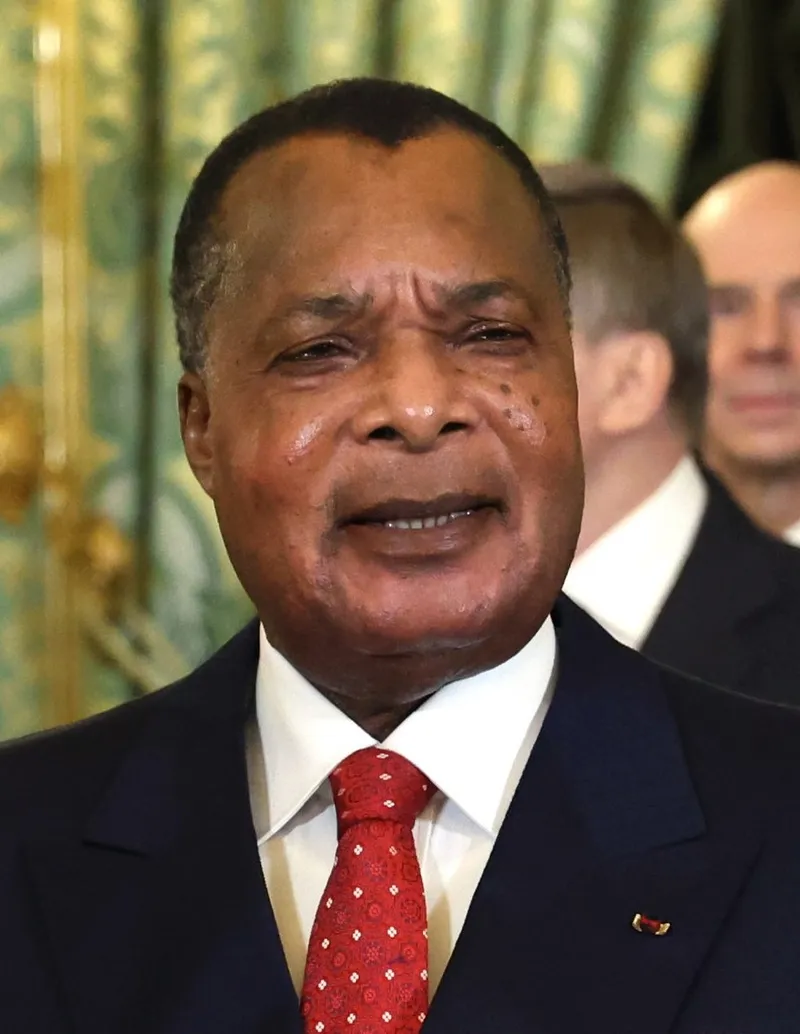
Denis Sassou Nguesso has led the Republic of the Congo for a combined 42 years since he first seized power in 1979, and in 2015 he rewrote the country’s constitution specifically to remove the rules that would otherwise have forced him from office.
Born November 23, 1943, in the village of Edou in what was then French Equatorial Africa, Sassou Nguesso trained as an army officer, including a stint at an infantry school in France, and rose through the ranks of the Congolese Labour Party, the Marxist-Leninist movement he helped found with President Marien Ngouabi in 1969. After Ngouabi’s assassination in 1977 and a period of internal party maneuvering, Sassou Nguesso emerged as president in February 1979, formalized by an election that July. He held power for 13 years before losing Congo’s first multiparty election in 1992 to Pascal Lissouba, an outcome he initially accepted.
That democratic interlude ended violently. In June 1997, fighting broke out between government forces and Sassou Nguesso’s private militia after troops surrounded his Brazzaville residence, touching off a civil war that political scientist John F. Clark’s 2008 study “The Failure of Democracy in the Republic of Congo” describes as ending the country’s fragile experiment with multiparty rule. The war, fought with the help of Angolan troops backing Sassou Nguesso, killed roughly 10,000 people before he retook the presidency that October, a position he has held ever since.
Congo’s 2002 constitution, adopted after the war, capped the presidency at two seven-year terms and set a maximum candidate age of 70, provisions that would have barred Sassou Nguesso from seeking a fourth term or contesting past his 70th birthday. In October 2015 his government put a new constitution to a referendum that eliminated both restrictions, shortening terms to five years but permitting up to three of them and dropping the age cap entirely. Official results showed 92% approval on 72% turnout, though the main opposition boycotted the vote and protests against the referendum turned violent in Brazzaville’s Bacongo and Makélékélé districts. The new charter cleared Sassou Nguesso to run again in 2016, which he won, and again in March 2021, when he was re-elected at age 77 with 88.57% of the vote after his leading challenger, Guy Brice Parfait Kolélas, died of COVID-19 hours after polls closed.
Sassou Nguesso’s family has also drawn sustained corruption scrutiny even as he has stayed in office. In September 2019, the microstate of San Marino announced it had seized €19 million ($20 million) tied to Sassou Nguesso from European shell accounts, part of an alleged €69 million ($76 million) laundering scheme investigators said ran from 2006 to 2011; reporting on the case, drawing on the original Telegraph investigation, detailed purchases including a pair of crocodile-skin shoes reportedly costing €114,000 (about $125,000) and roughly €2.3 million ($2 million) spent on watches. Separate investigations by the anti-corruption group Global Witness that same year accused his son, Denis-Christel Sassou-Nguesso, of siphoning $50 million through shell companies, and his daughter Claudia of using misappropriated state funds to buy a Manhattan apartment in Trump Tower, allegations family members have denied.
Sassou Nguesso extended his rule again in the March 2026 election, winning a fifth term with a provisional 94.8% of the vote on turnout of 84.65%, against a divided field of six candidates while the main opposition boycotted the race as a “farce.” At 82, and with Congo’s current constitution barring him from running again in 2031, he told AFP during the campaign that he would not remain “in power forever,” though he named no potential successor. Congo remains one of Africa’s larger oil and gas producers, but more than half its population lives below the poverty line, a gap between resource wealth and living standards that critics attribute in part to state oil revenue diverted into officials’ personal accounts.
Sources
- “Denis Sassou-Nguesso (1943- )”, BlackPast.org.
- “Congo votes to remove presidential term limits”, Al Jazeera.
- “Congo Brazzaville's Sassou Nguesso re-elected with more than 88% of vote, early results show”, France 24.
- “Congo president's $19m seized in San Marino after 'spending more than $2m on watches and crocodile shoes'”, Face2Face Africa.
- “Congo-Brazzaville's Sassou Nguesso reaps landslide re-election win, provisional results suggest”, France 24.
Books & Further Reading
John F. Clark, The Failure of Democracy in the Republic of Congo (Lynne Rienner Publishers, 2008, ISBN 9781588265555)
Also posted once more between 2020 and 2021.