By Princewill Ubani · Published
Research ID: PA-ART-363445453674651650
The Berbers: North Africa's Indigenous People, Millennia Before the Arab Conquests
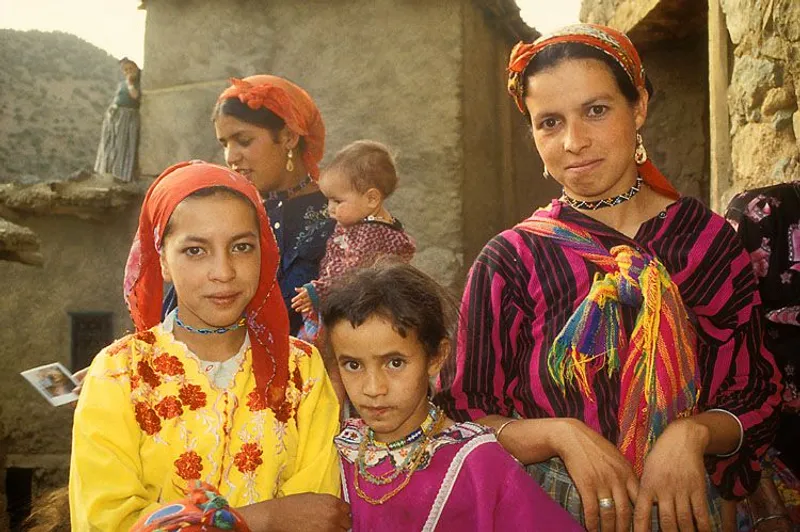
Long before Arab armies crossed into North Africa in the 7th century, the Maghreb, the sweep of coast and desert running from today’s Morocco to Libya, was already home to a distinct people whose ancestry in the region reaches back millennia. They are widely known by the name Berber, but they call themselves Imazighen, singular Amazigh, a term generally translated as “free people” or “free men.” The label “Berber” itself has a less flattering origin: it descends from the Latin barbarus, the same root as “barbarian,” a name Roman writers applied to the region’s inhabitants rather than one those inhabitants chose for themselves.
Archaeological and genetic evidence places Berber ancestry in North Africa across an extraordinarily long timescale. According to the Encyclopedia of the Modern Middle East and North Africa, genetic evidence indicates that populations ancestral to the Berbers have inhabited the region since the Upper Paleolithic era, tens of thousands of years ago, making Berber ancestry in the Maghreb older than agriculture itself. By around 1300 BC, Egyptian records were already documenting peoples from further west along the North African coast, evidence that outside observers had recognized the region’s inhabitants as a distinct population well over a thousand years before Rome, let alone Arab armies, arrived.
For most of that long span, Berber-speaking groups were the Maghreb’s dominant population, organizing into kingdoms such as Numidia, ruled in the 2nd century BC by Masinissa, who unified rival Numidian factions under Roman patronage and spent decades consolidating territory that had once belonged to his ancestors. Berber political and cultural dominance across the Sahara persisted through the Roman and Vandal periods and lasted until the Islamic conquests of the 8th century AD brought a new wave of Arab settlement and, gradually, religious and linguistic change across the region.
Berber-speaking communities never disappeared, even as Arabic spread as the region’s dominant language and Islam became its dominant religion. Amazigh populations persisted, above all in Morocco’s Atlas Mountains, the Algerian mountains of Kabylia and the Aurès, the Sahara’s Tuareg territories, and Egypt’s Siwa Oasis, preserving Berber languages, oral traditions and forms of local governance for well over a thousand years after the conquests that are often mistakenly treated, in popular retellings, as the moment North Africa’s history as an indigenous, non-Arab region effectively ended.
Books & Further Reading
Michael Brett and Elizabeth Fentress, The Berbers (Blackwell, 1997, ISBN 9780631207672)