By Princewill Ubani · Published · Updated
Research ID: PA-ART-1020591847499067397
African Genomes Are the Most Diverse on Earth. Cancer Research Mostly Ignores Them
Modern humans lived in Africa for tens of thousands of years before any population moved elsewhere, and that long head start left its mark on the genome. African populations carry more genetic variation, within and between groups, than the rest of the world’s populations combined. A 2018 Newsweek investigation crystallized just how stark that diversity is with a single comparison from geneticist Sarah Tishkoff of the University of Pennsylvania: “We compared European and Asian populations to each other, and they were more similar than any two African populations we looked at.” Two populations from opposite ends of Eurasia, in other words, are genetically closer to each other than two neighboring populations within Africa often are to one another.
That diversity should make African genomes a priority for medical research, since a mutation that looks rare in European samples might turn out to be common once African populations are actually included, changing how researchers interpret disease risk across the board. Instead, the opposite has happened. The first quantitative count, published by Anna Need and David Goldstein in 2009, found that 96% of participants in genome-wide association studies were of European ancestry and 3% were Asian, leaving every other population in the world sharing less than 1% between them. When Alice Popejoy and Stephanie Fullerton revisited the question for Nature in 2016, the share of samples from people of African ancestry had risen by 2.5%, and African, Latin American, Hispanic and indigenous participants together still accounted for under 4% of all samples analysed. Cancer genomics in particular remains built almost entirely on European ancestry data. Treatments and diagnostic tools calibrated against that narrow genetic baseline risk performing poorly, or missing disease markers altogether, in the populations left out of the research that produced them.
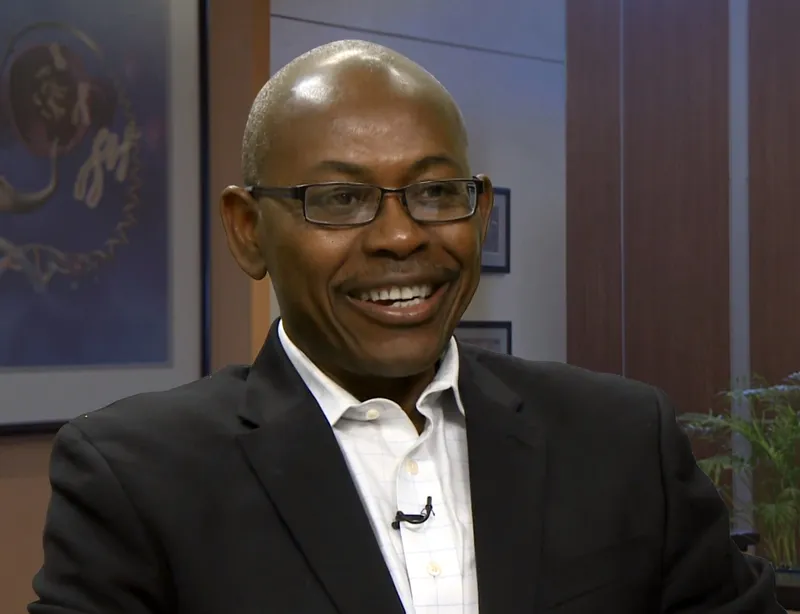
Nigerian-born geneticist Charles Rotimi has spent much of his career working to close that gap. Recognizing early how thoroughly African populations were being excluded from human genetics research, he founded the African Society of Human Genetics in 2004, then went further in 2010 by helping launch H3Africa, the Human Heredity and Health in Africa initiative, with funding from the US National Institutes of Health, to build genomic research capacity on the continent itself rather than simply importing African samples for study elsewhere. Rotimi has framed the stakes in plain terms: “We are all Africans beneath our skin,” a reminder that every human lineage traces back to the continent whose genetic data science has been the slowest to take seriously.
The exclusion Newsweek documented was not a matter of African DNA being hard to obtain or uniquely difficult to study. It reflected where research funding, institutional infrastructure and scientific attention had historically been concentrated, a pattern scientists like Rotimi and Tishkoff have argued costs the entire field accuracy, not just African patients, since a genomic map missing its most diverse branch is an incomplete map for everyone.
Sources
- “Cancer Scientists Have Ignored African DNA in the Search for Cures”, Newsweek.
- Alice B. Popejoy and Stephanie M. Fullerton. “Genomics is failing on diversity (Vol. 538, No. 7624, pp. 161-164)”, Nature, 2016.
- Anna C. Need and David B. Goldstein. “Next generation disparities in human genomics: concerns and remedies (Vol. 25, pp. 489-494)”, Trends in Genetics, 2009.
- Kelly Morris. “Charles Rotimi: engaging Africa in human genomic research (Vol. 376, No. 9750, p. 1383)”, The Lancet, 2010.