Published
Kwame Nkrumah's Death in Exile and His Return to Ghana
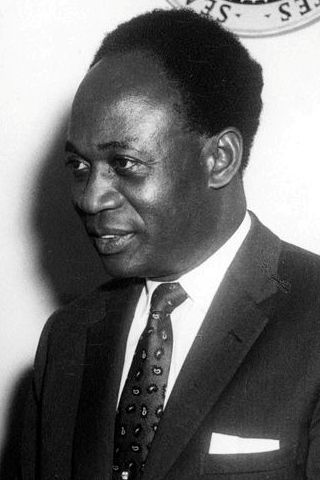
Kwame Nkrumah, Ghana’s first president and one of the leading figures of African independence, died on April 27, 1972, not in Ghana or in the country that had sheltered him, but in Bucharest, Romania, where he had traveled for cancer treatment. He was 62.
By then Nkrumah had already spent six years in exile. He was overthrown in a military coup on February 24, 1966, while abroad on a diplomatic trip to China and North Vietnam intended to help mediate an end to the Vietnam War, and he never returned to Ghana. Guinea’s president, Ahmed Sékou Touré, his old ally from the failed Ghana-Guinea-Mali Union a decade earlier, offered him refuge in Conakry and named him honorary co-president of Guinea, a largely symbolic title that let Nkrumah continue positioning himself as an elder statesman of Pan-Africanism even without a country of his own to govern. It was from Guinea, not Ghana, that he traveled to Romania for the medical treatment that failed to save him.
After his death, Nkrumah’s body was returned to Conakry and buried there, a reflection of both Touré’s personal loyalty and the unresolved question of which country had the stronger claim to his legacy. Ghana, then under the military government of the National Redemption Council led by Ignatius Acheampong, opened negotiations with Touré to bring Nkrumah’s remains home. Touré did not hand the body over easily; historical accounts describe him attaching conditions to the transfer, including a demand that Ghana receive the remains with the full honors due a former head of state. It took months of diplomacy, including a Ghanaian delegation traveling to Conakry, before Touré relented.
Nkrumah’s body was exhumed in Conakry and flown to Accra on July 7, 1972, aboard a Guinean Air Force aircraft. It lay in state at Ghana’s State House the following day as thousands of Ghanaians came to pay respects, before being flown on to his home region for burial in a vault at his birthplace, the village of Nkroful, that Sunday. That was not, however, Nkrumah’s final resting place. Twenty years later, in July 1992, his remains were exhumed once more and moved to a purpose-built mausoleum in Accra, the Kwame Nkrumah Memorial Park and Mausoleum, where they remain today, a site that draws visitors from across Ghana and the African diaspora.
Sources
- Ghana Studies (University of Wisconsin Press) — The Death and Burial of Kwame Nkrumah
- GhanaWeb — The mystery around what actually happened to Kwame Nkrumah's body
- Kwame Nkrumah Memorial Park (official) — The Mausoleum
- Britannica — Kwame Nkrumah, biography, overthrow, and death
- Britannica — Sékou Touré, biography and hosting of Nkrumah in exile
Books & Further Reading
Jeffrey S. Ahlman, Kwame Nkrumah: Visions of Liberation (Ohio Short Histories of Africa, Ohio University Press, ISBN 9780821424520)