Published
Toussaint Louverture: The Life of Haiti's Revolutionary Leader
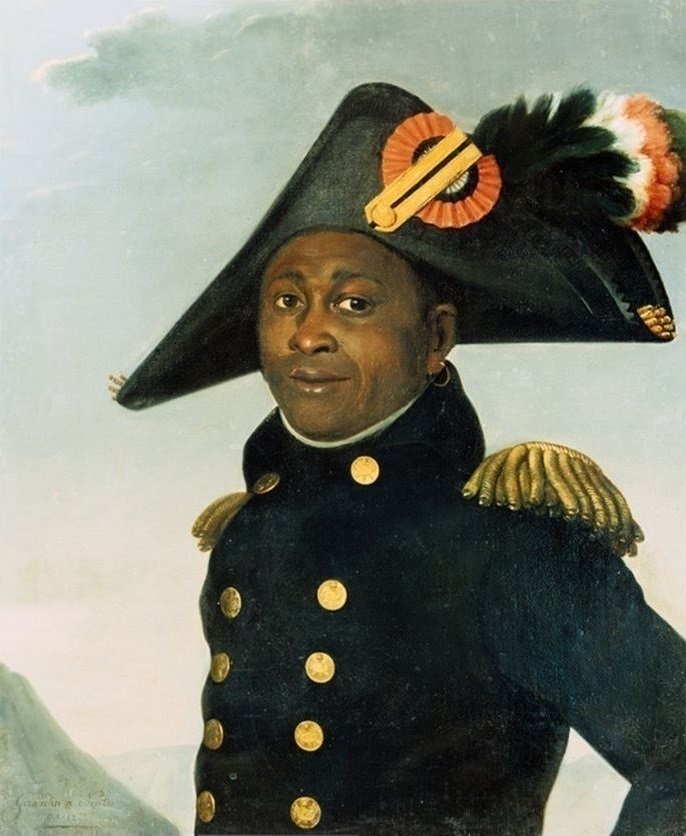
Toussaint Louverture never lived to see the nation his leadership made possible. He died in a French mountain prison in April 1803, nine months before Haiti declared its independence, betrayed by the very government he had tried to negotiate with. His life traces the arc of the Haitian Revolution itself: from slavery, through legal freedom under a still-brutal colonial order, to command of the largest and most successful slave uprising in modern history.
He was born around May 20, 1743, on the Bréda plantation near Cap-Français in the French colony of Saint-Domingue, one of the most profitable and most brutal slave societies in the Americas. His father, Hyppolite, had been enslaved from the Allada region of the West African coast, in territory that corresponds roughly to parts of present-day Benin: some accounts, drawing on later oral and biographical traditions, describe Hyppolite as a member of Allada’s nobility or even royal family, said to be a son of a king named Gaou Guinou. Historians treat this royal lineage claim with caution, since little contemporary documentary evidence supports it beyond the family’s own later accounts, though Hyppolite’s Allada origin itself is better attested. What exact status Toussaint’s African ancestry carried, in other words, remains genuinely unsettled history rather than a confirmed fact, a point worth stating plainly rather than repeating the more romantic version as certain.
Toussaint spent decades enslaved on the Bréda plantation, where he learned to read, worked as a coachman and livestock handler, and by most accounts was manumitted (freed) sometime between 1772 and 1776, years before the revolution began. As a free man of color he went on to lease and later own land and enslaved laborers himself, a detail modern historians treat as an uncomfortable but well-documented complication in his biography rather than something to smooth over.
When enslaved people across northern Saint-Domingue rose in rebellion in August 1791, Toussaint, then approaching fifty, joined as a lieutenant under early rebel commander Georges Biassou rather than as an initial leader. Over the next several years he built his own disciplined fighting force, adopted the surname “Louverture,” generally understood to reference his skill at finding openings in enemy lines, and maneuvered through a complex, shifting war involving French, Spanish, and British forces all competing for control of the colony. He allied briefly with Spain before switching to the French Republic in 1794, after revolutionary France abolished slavery in its colonies, and by 1797 had risen to become the colony’s top military commander, effectively governing Saint-Domingue.
In July 1801, Louverture promulgated a constitution that made him governor-general for life and abolished slavery permanently within the colony, without seeking approval from Paris, an act of near-total autonomy that alarmed Napoleon Bonaparte, who was then working to restore French colonial slavery and control. Napoleon dispatched a massive military expedition under General Charles Leclerc in 1802 to crush the colony’s autonomy. After months of fighting, Louverture agreed to a negotiated peace, only to be seized by French forces under false pretenses on June 7, 1802, and deported to France. He was imprisoned at Fort de Joux in the Jura mountains, deliberately deprived of adequate food, warmth, and medical care through the winter, and died there on April 7, 1803, at age fifty-nine.
His former lieutenants, principally Jean-Jacques Dessalines, continued the war Louverture had built the army and strategy for, ultimately defeating the French and declaring Haitian independence on January 1, 1804. Louverture did not live to see it, but the revolutionary state, army, and political vision that produced it were substantially his.
Sources
Books & Further Reading
Philippe Girard, Toussaint Louverture: A Revolutionary Life (Basic Books, 2016, ISBN 9780465094134)