Published
Timbuktu's Golden Age as a Center of Islamic Scholarship
Timbuktu began, around 1100 CE, as a seasonal camp where Tuareg nomads gathered to trade at the point where the Sahara meets the Niger River. Its location made it a natural relay point for trans-Saharan commerce (gold, ivory, and enslaved people moving north, salt from the Saharan mines of Taghaza moving south), and that commercial wealth is what eventually funded its transformation into a center of Islamic scholarship.
That transformation accelerated once Timbuktu came under the control of the Mali Empire in the fourteenth century. Mansa Musa, whose 1324 pilgrimage to Mecca made Mali’s wealth famous across the Mediterranean world, is credited with sponsoring mosque and school construction in the city on his return, including work associated with the Djinguereber Mosque. The city’s scholarly reputation deepened further after Songhai forces under Sonni Ali and then Askia Muhammad absorbed Timbuktu in the late fifteenth century; under Askia Muhammad’s rule (1493–1528) and his successors, the city reached the height of both its commercial and intellectual life.
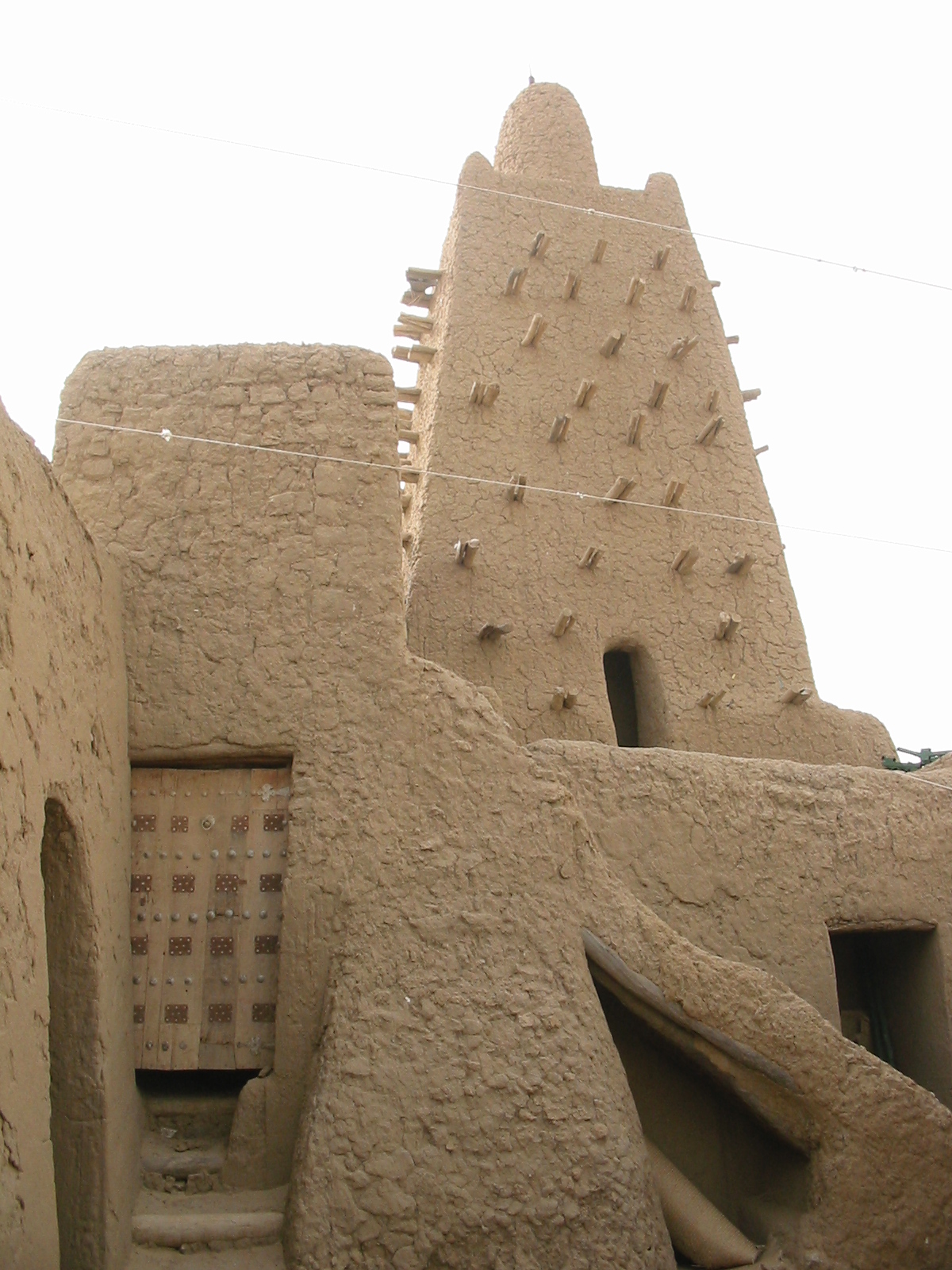
Three institutions anchored that intellectual life: the Sankore, Djinguereber, and Sidi Yahya mosques, each functioning as a madrasa, or center of religious and legal instruction, rather than a university in the modern institutional sense. The Sankore Madrasa, built around the Sankore Mosque whose origins reach back to the late tenth century, was the most prominent: a loose network of independent schools, each run by its own master scholar, rather than a single degreed institution with a unified administration. Students studied the Quran and Islamic law as a foundation, then moved on to logic, astronomy, mathematics, medicine, rhetoric, and history, often traveling from as far as Egypt, Mecca, and across West Africa to study or teach there.
The often-cited figure of roughly 25,000 students at Sankore’s peak appears across many secondary accounts, including in respected surveys of the city’s history, but it should be read as an approximation rather than a verified census: no contemporary institutional record survives to confirm it precisely, and Timbuktu’s total population at the time is itself only roughly estimated at around 100,000. What is better documented is the sheer output of the scholarly community: private libraries across the city, numbering in the dozens, held collections that eventually totaled in the hundreds of thousands of manuscripts, produced and copied by generations of local scholars. That written record, not any single enrollment figure, is the strongest evidence of Timbuktu’s status as one of the major intellectual centers of the medieval Islamic world, one that flourished for roughly two centuries before Moroccan forces conquered the city in 1591 and its scholarly institutions went into a long decline.
Sources
- World History Encyclopedia — Timbuktu: West Africa's Great Trading Centre
- BlackPast.org — Timbuktu (ca. 1100– )
- Muslim Heritage — The University of Sankore, Timbuktu
- Britannica — Timbuktu, on its founding, Mansa Musa's mosque-building, and the c. 25,000 scholars at its peak
- Oxford Research Encyclopedia of African History — reference entry on Timbuktu's scholarly and manuscript tradition
Books & Further Reading
Elias N. Saad, Social History of Timbuktu: The Role of Muslim Scholars and Notables, 1400–1900 (Cambridge University Press, 1983, ISBN 9780521246033)