Published
Thomas Fuller, the Enslaved 'Virginia Calculator'
Thomas Fuller could not read or write a single word in English, in any language, throughout his entire life. Yet by the time Philadelphia physician Benjamin Rush and two Quaker abolitionists tested him in 1788, at roughly age seventy-eight, Fuller could multiply nine-digit numbers in his head and solve compound arithmetic problems faster than the men holding the pen and paper meant to check his work. For a country actively debating whether Black people were intellectually capable of freedom, his mind became an inconvenient piece of evidence.
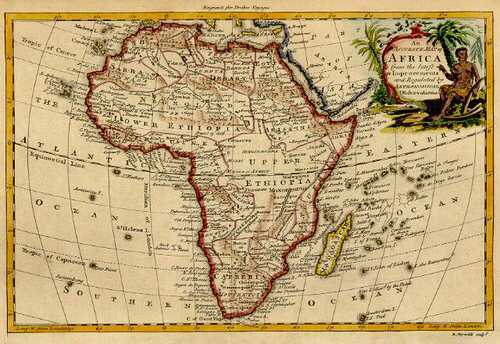
Fuller was born around 1710 in West Africa, in a region historians place somewhere between present-day Liberia and Benin, though the precise location was never recorded. Contemporary accounts agree he was kidnapped and forced onto a slave ship around age fourteen, arriving in the Virginia colony in 1724. He spent the rest of his life enslaved on a farm four miles west of Alexandria, Virginia, owned first by Presley Cox and then his widow, Elizabeth Cox. He received no formal schooling of any kind: not reading, not writing, not arithmetic. Whatever calculating ability he possessed, he had already developed before he was forced across the Atlantic, a detail that later observers found significant: it suggested a tradition of mental computation Fuller brought with him from Africa rather than one taught to him in bondage.
Fuller’s talent went largely unnoticed outside his immediate community until word of it reached Philadelphia’s abolitionist circles in the late 1780s. In 1788, William Hartshorne and Samuel Coates, members of the Pennsylvania Society for the Abolition of Slavery, traveled to test him directly. They posed a series of demanding problems. Asked how many seconds a man had lived who was seventy years, seventeen days, and twelve hours old, Fuller gave the correct answer, 2,210,500,800, in about ninety seconds. When one of his questioners initially objected that the number was too high, Fuller corrected him, pointing out that the questioner had forgotten to count the extra days added by leap years. In another documented exchange, he computed the number of seconds in a year and a half, 47,304,000, in roughly two minutes. He is also credited with rapidly solving a compounding livestock-breeding problem and, in a less rigorously documented anecdote, estimating the number of hairs in a cow’s tail.
Benjamin Rush, a signer of the Declaration of Independence and one of the era’s most prominent physicians, wrote up the Pennsylvania Society’s findings and had them published and circulated among abolitionist networks in the United States and Britain. The account reached French revolutionary and abolitionist Jacques Pierre Brissot de Warville, who cited Fuller in 1792 as proof that Black people’s intellectual capacity “may be extended to any thing” and needed only “instruction and liberty” to flourish, a direct rebuttal to the era’s pseudoscientific racial hierarchies, which held up literacy and formal education, both of which slavery deliberately denied enslaved people, as evidence of inferiority.
Fuller died enslaved in December 1790, having never gained his freedom despite his fame. An anonymous obituary in Boston’s Columbian Centinel mourned that “perhaps Africa never produced a man of more extraordinary talents.” Modern historians of mathematics and cognition have debated whether Fuller’s abilities constitute a documented case of savant-level calculation or reflect a broader, underappreciated tradition of oral mental arithmetic in West and Central Africa; no consensus settles the question, since so little else about his inner life or upbringing survives. What remains uncontested is the use his contemporaries made of him: at a moment when slavery’s defenders leaned on claims of Black intellectual deficiency, an illiterate, enslaved farm laborer in Virginia did compound arithmetic in his head faster than the free, educated men sent to test him.
Sources
- Encyclopedia Virginia — Thomas Fuller (ca. 1710–1790)
- MacTutor History of Mathematics (University of St Andrews) — Thomas Fuller
- BlackPast — Thomas Fuller (1710-1790)
- ScienceDirect (Historia Mathematica) — Fauvel & Paulus, "African slave and calculating prodigy: bicentenary of the death of Thomas Fuller" (1990)
Books & Further Reading
John Fauvel and Paulus Gerdes, 'African Slave and Calculating Prodigy: Bicentenary of the Death of Thomas Fuller,' Historia Mathematica 17(2), 1990, 141-151