Published
Sékou Touré: Guinea's Independence Hero and Authoritarian Ruler
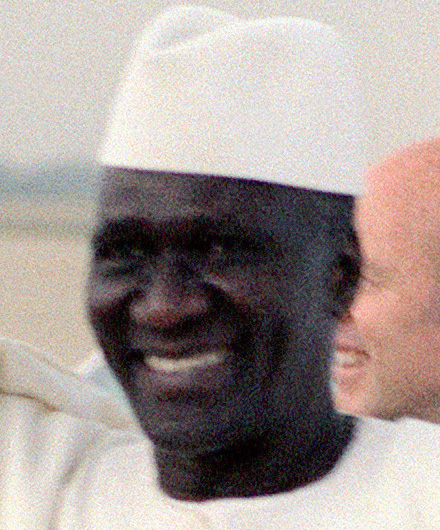
Ahmed Sékou Touré led Guinea to a genuinely distinct kind of independence in 1958. When Charles de Gaulle offered France’s African colonies a choice that year between limited autonomy within a new French Community or full, immediate independence, with the explicit warning that independence would mean the end of French aid, Guinea was the only territory to vote no in the September 1958 referendum. Touré rallied the country around the position with a defiant public message to de Gaulle, telling him that Guineans preferred poverty in freedom to prosperity in servitude. Guinea declared independence on October 2, 1958, becoming the first French African colony to break fully from Paris rather than negotiating a transition. France responded by abruptly withdrawing its administrators and technical staff, and by some accounts stripping outgoing offices of equipment and destroying records on the way out, leaving the new state to build its institutions from very little.
That founding achievement made Touré a hero to independence movements across the continent, and he spent his early years in office positioning Guinea as a base for pan-Africanist and anti-colonial solidarity, hosting exiled figures such as Kwame Nkrumah after Nkrumah’s own overthrow in Ghana. Domestically, however, Touré built one of postcolonial Africa’s more thoroughgoing single-party states. He declared his Democratic Party of Guinea the country’s only legal party in 1960 and ran a centralized socialist economy that nationalized major industries and foreign-owned enterprises.
Touré’s government became progressively more repressive over the following two decades. He responded to real and, by many accounts, largely invented coup plots and conspiracies with sweeping crackdowns, imprisoning thousands of perceived opponents, including prominent intellectuals, former officials, and religious leaders, in a network of camps, the most notorious of which was Camp Boiro in the capital, Conakry. Detainees there faced torture, starvation, and, in many documented cases, execution. Estimates of the death toll under Touré’s rule vary considerably: Guinean human rights groups and some researchers put the number killed or disappeared at around 50,000, while a U.S. congressional estimate placed the figure closer to 5,000; mass graves uncovered near the town of Kindia in 2002, one reportedly containing hundreds of bodies, added physical evidence to the accounts of survivors and exiles. The repression drove an estimated one million or more Guineans into exile over the course of his rule.
Touré died of a heart attack on March 26, 1984, during emergency surgery at the Cleveland Clinic in the United States. Within hours of the announcement of his death, a group of military officers seized power in Conakry, denouncing his government as a “bloody and ruthless dictatorship” and releasing roughly a thousand political prisoners still held in the country’s detention camps. Decades later, no individual responsible for the abuses of Touré’s era had been brought to trial in Guinea, a gap that human rights organizations have identified as a lasting obstacle to accountability in the country’s politics.
Sources
Books & Further Reading
L. Adamolekun, Sékou Touré's Guinea: An Experiment in Nation Building (Methuen, 1976; Routledge reissue)