Published
Romanus Pontifex: The Papal Bull That Sanctioned Portugal's Slave Trade

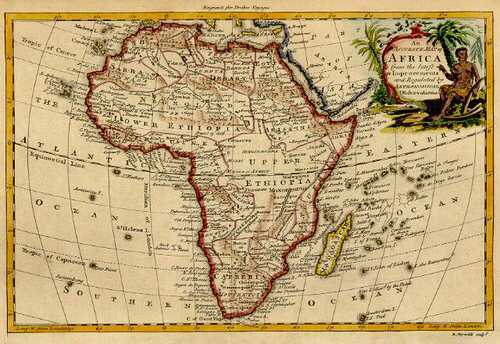
On January 8, 1455, Pope Nicholas V issued the papal bull Romanus Pontifex, addressed to King Afonso V of Portugal, a document that stands, alongside its predecessor Dum Diversas of June 18, 1452, as one of the foundational texts giving European Christendom’s highest religious authority to the conquest, trade monopoly, and enslavement Portugal was already pursuing along the West African coast. The two bulls are often conflated or mislabeled with each other’s dates in popular retellings, but they served distinct purposes: Dum Diversas, issued three years earlier, gave King Afonso broad authority to invade, conquer, and reduce to “perpetual slavery” any Muslims, pagans, and other non-Christians and seize their possessions and lands, framed as an extension of the Reconquista and crusading warfare against Islam. Romanus Pontifex, the more consequential of the two for West Africa specifically, went further: it praised Afonso’s voyages of exploration past Cape Bojador, granted Portugal exclusive rights to trade with and conquer all lands and peoples discovered along the African coast, explicitly authorized enslaving the inhabitants encountered there, and barred other Christian powers from trading in the region without Portuguese permission.
The bull’s language did real practical work. It converted what had been Portuguese commercial and military initiative, already underway for more than a decade by 1455, following Prince Henry the Navigator’s sponsored voyages and the first captives brought to Lagos in the 1440s, into something with the Church’s institutional backing, at a time when papal authority carried enormous weight in disputes between Catholic monarchies. That backing mattered diplomatically: it gave Portugal grounds to resist rival claims from Castile over West African territory, and it framed the trade in African captives, remarkably, as a form of spiritual mercy, since Romanus Pontifex suggested that removing people from what it called pagan darkness and exposing them to conversion could be read as a benefit conferred upon them, even as it authorized their permanent enslavement in the same breath.
The bulls’ influence outlasted their immediate purpose by centuries. Legal historians treat Dum Diversas, Romanus Pontifex, and the later bull Inter Caetera (1493, addressed to Spain regarding the Americas) as the core texts of what became known as the Doctrine of Discovery: the principle that a Christian European power’s “discovery” of non-Christian lands and peoples conferred legal title over them. That doctrine did not stay confined to Iberian diplomacy: American courts cited it directly, most notably in the U.S. Supreme Court’s 1823 decision Johnson v. McIntosh, in which Chief Justice John Marshall invoked the historical practice of European powers, including Portugal’s and Spain’s papal grants, as precedent for denying Native American nations full title to their own land. Legal scholars have traced strands of that reasoning through subsequent American Indian law for nearly two centuries afterward. The Vatican has never formally revoked Romanus Pontifex itself, though the Holy See explicitly repudiated the broader Doctrine of Discovery in a joint statement from the Vatican’s Dicasteries for Culture and Education and for Promoting Integral Human Development in March 2023, acknowledging the harm the framework had caused and stating it was never a true expression of Catholic teaching.
Sources
Books & Further Reading
Pius Onyemechi Adiele, The Popes, the Catholic Church and the Transatlantic Enslavement of Black Africans 1418-1839 (Sklaverei · Knechtschaft · Zwangsarbeit series, Vol. 16, ISBN 9783487155975)