Published
Oliver Tambo's Escape Into Exile, 1960

In the chaotic weeks after police killed 69 protesters at Sharpeville on March 21, 1960, the African National Congress made a decision that would define the movement’s next three decades: rather than let its entire leadership be swept up in the government’s crackdown, it sent Oliver Tambo, then the organization’s deputy president, out of the country to build international support and, if the ANC itself were banned, to lead a mission in exile. On March 27, 1960, Tambo was driven across the border into the British protectorate of Bechuanaland (now Botswana) by the journalist Ronald Segal, days before the government formally outlawed the ANC on April 8.
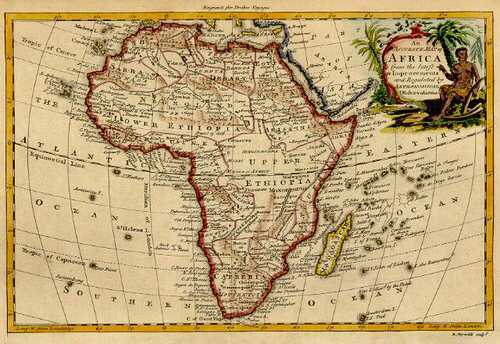
What followed was an improvised, high-stakes journey across a continent still mostly under colonial rule, with few African states yet independent enough to offer safe harbor. From Bechuanaland, Tambo and fellow activist Yusuf Dadoo traveled by chartered plane toward Tanganyika, where Julius Nyerere, not yet his country’s president but already a sympathetic nationalist leader, received them in Dar es Salaam. From there Tambo pressed on through Kenya, gathering travel documents from sympathetic governments along the way, then to Tunisia, where he delivered his first public speech outside South Africa and met President Habib Bourguiba, and later to Ghana for an audience with Kwame Nkrumah, one of the era’s most influential Pan-Africanist heads of state. By May 1, 1960, he had reached Denmark at the invitation of its prime minister, marking the start of his outreach to European governments. He eventually settled with his family in Muswell Hill, London, which became the operational base for the ANC’s external mission for most of the next three decades.
From exile, Tambo built the infrastructure that kept the ANC alive as a political and military force while its leadership at home, including Nelson Mandela, was imprisoned. He became ANC president in 1967 and held the position until 1991, overseeing Umkhonto we Sizwe’s armed campaign, negotiating support and training from allied governments and the Soviet bloc, and running a sustained diplomatic campaign that helped keep apartheid isolated at the United Nations and turned international sanctions into a serious economic pressure on Pretoria. He did not return to South Africa until 1990, after the ANC’s unbanning, having spent virtually the entire apartheid era’s final three decades outside the country he had fled as a fugitive in 1960. He died in 1993, a year before the democratic election his decades of exile diplomacy had helped make possible; Johannesburg’s O.R. Tambo International Airport, the busiest in Africa, was renamed in his honor in 2006.
Sources
Books & Further Reading
Luli Callinicos, Oliver Tambo: Beyond the Engeli Mountains (David Philip, ISBN 9780864866660)