Published
Marcus Garvey, the UNIA, and the Black Star Line

Marcus Garvey, born in Saint Ann’s Bay, Jamaica, in 1887, built the largest mass movement of people of African descent the world had yet seen, and did it around a simple, radical promise: that Black people worldwide could achieve dignity and self-determination only through economic independence and, ultimately, a return to a free Africa.
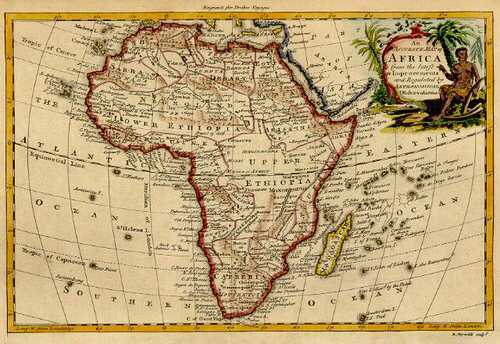
Garvey founded the Universal Negro Improvement Association (UNIA) in Jamaica in 1914, then relocated its headquarters to Harlem, New York, by 1917. Through mass rallies, parades in Harlem featuring UNIA members in elaborate uniforms, and his newspaper Negro World, Garvey built the UNIA into an organization claiming millions of members and sympathizers across the United States, the Caribbean, and Africa by the early 1920s, an unprecedented scale for a Black-led organization at the time. His movement preached race pride, Black economic self-sufficiency, and what came to be known as the Back-to-Africa movement: the belief that people of African descent in the diaspora should work toward repatriating to and redeeming a Africa free of European colonial rule.
The most ambitious expression of that program was the Black Star Line, a shipping company Garvey incorporated in 1919, named in deliberate contrast to the White Star Line, the British company behind the Titanic. Financed by stock sold directly to UNIA members and supporters at $5 a share, the Black Star Line was meant to serve two purposes at once: it would carry goods between Black communities in the Americas, the Caribbean, and Africa, building an independent Black commercial network, and it would eventually provide the means for large-scale repatriation to Africa. The line purchased several aging vessels, but the venture was plagued from the start by mismanagement, inflated purchase prices, mechanical failures, and financial irregularities among the officers Garvey had entrusted with running it. It also drew close surveillance from the Bureau of Investigation, forerunner to the FBI, which had assigned an agent to infiltrate the UNIA.
Those problems collapsed the company by 1922. That year, federal prosecutors charged Garvey and three Black Star Line officials with mail fraud tied to the sale of stock in a ship, the SS Phyllis Wheatley, that the company never actually owned or delivered. Garvey, representing himself in court, was convicted on June 18, 1923, while his three co-defendants were acquitted. He was sentenced to five years in federal prison, began serving his term in 1925, and was deported to Jamaica in 1927 after his sentence was commuted. He continued organizing from Jamaica and later London until his death in 1940. In January 2025, more than a century after his conviction, President Joe Biden granted Garvey a posthumous pardon, a step his descendants and supporters had sought for decades on the grounds that the original prosecution was politically motivated.
Sources
- BlackPast — Black Star Line (1919-1923)
- BlackPast — Marcus Garvey (1887-1940)
- American Bar Association Journal — June 18, 1923: Marcus Garvey convicted of mail fraud
- GovInfo (US Government Publishing Office) — Administration of Joseph R. Biden, Jr., 2025: Statement on Executive Clemency, including Garvey's posthumous pardon
- Britannica — Universal Negro Improvement Association (UNIA)
Books & Further Reading
Colin Grant, Negro with a Hat: The Rise and Fall of Marcus Garvey (Oxford University Press, 2008, ISBN 9780195367942)