Published
The Liberation of Ethiopia and Haile Selassie's 1941 Return to Addis Ababa
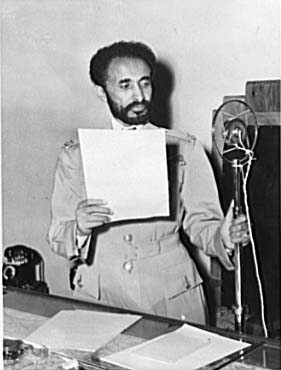
Italy’s occupation of Ethiopia lasted barely five years, but it ended almost exactly where it began. Mussolini’s forces had invaded in October 1935 and entered Addis Ababa on May 5, 1936, prompting Haile Selassie to go into exile rather than surrender the country he still legally ruled. Exactly five years later, on May 5, 1941, the emperor re-entered his capital in the company of Ethiopian irregular fighters known as the Arbegnoch (“Patriots”), who had waged a guerrilla resistance against the occupation throughout, alongside British and Commonwealth troops.
The military campaign that made his return possible had moved fast. British, South African, Indian, West African, and Free French and Free Belgian forces, coordinated with Ethiopian resistance fighters, advanced into Italian East Africa from Sudan and Kenya in early 1941. Addis Ababa fell to Allied and Patriot forces on April 6, 1941, a month before Haile Selassie’s arrival, though pockets of Italian resistance held out in the country’s interior for months afterward, with the last organized Italian forces surrendering at Gondar in November 1941. In his first address after returning, Haile Selassie urged Ethiopians not to take revenge on the defeated Italian population, an appeal credited with limiting reprisal violence in the capital.
The human cost of the occupation remains genuinely disputed among historians, and the site’s sourcing standards require flagging that clearly rather than repeating a single number as settled fact. Ethiopian government estimates compiled after the war put total deaths from the invasion and occupation, including combat deaths, the 1937 Addis Ababa massacre carried out in reprisal for an assassination attempt on the Italian viceroy, forced labor, and the use of chemical weapons, in the hundreds of thousands, with some Ethiopian and later secondary sources citing figures near or above 700,000. Other historians, working from more limited documentary evidence, have argued for substantially lower totals. The Addis Ababa massacre alone illustrates the range: Ethiopian sources at the time claimed roughly 30,000 dead, other assessments have put the toll between 1,400 and 6,000, and a detailed 2017 academic study estimated around 19,200 deaths, close to a fifth of the city’s population at the time. No single figure for the occupation as a whole commands consensus, and readers should treat any precise total with caution.
What is not disputed is the outcome: Italy’s attempt to build an East African empire collapsed within five years, Ethiopia was the first country liberated by Allied forces during the Second World War, and Haile Selassie resumed a reign that would continue for another three decades. Mussolini himself was captured and killed by Italian partisans in April 1945, a separate episode from the Ethiopian campaign but one that closed the story of the man whose colonial ambitions had brought war to the Horn of Africa.
Sources
- Imperial War Museums — How Italy was defeated in East Africa in 1941
- Origins (Ohio State University) — Emperor Haile Selassie I Returns Triumphant to Ethiopia
- History Today — review of The Addis Ababa Massacre, on contested Italian-occupation death tolls
- History Guild — Taking Back the Homeland: Ethiopian Guerrillas in World War II, on the Arbegnoch resistance
- Storia Italiani d'Etiopia — English timeline, on Haile Selassie's May 1941 return and the final Italian surrenders
Books & Further Reading
Bereket Habte Selassie, Emperor Haile Selassie (Ohio Short Histories of Africa, Ohio University Press, ISBN 9780821421277)