Published
Keorapetse Kgositsile: Poet, ANC Exile, and National Poet Laureate
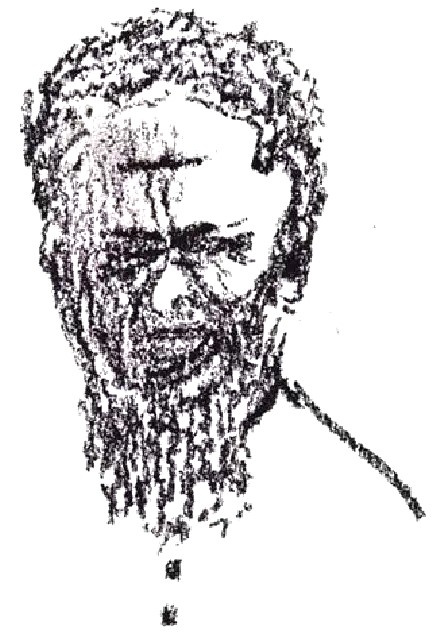
Keorapetse William Kgositsile, born September 19, 1938, left South Africa in 1961 on ANC instructions as apartheid repression intensified, beginning an exile of roughly three decades that would take him from underground political work into the middle of a transatlantic literary movement. He landed in New York in 1962 and quickly found his way into the city’s Black Arts scene, befriending writers including Amiri Baraka, then still publishing as LeRoi Jones, and Ishmael Reed. Alongside them, Kgositsile helped shape what became known as the Black Arts Movement of the mid-to-late 1960s, and in Harlem he co-founded the Black Arts Theatre, a hub for politically engaged Black poetry, drama, and performance. He studied at Lincoln University, the University of New Hampshire, and Columbia University, where he completed an MFA in creative writing in 1971, while publishing early poetry collections including Spirits Unchained and My Name Is Afrika that fused African political urgency with the rhythms of American jazz and Black vernacular speech.
Kgositsile’s significance to the Black Arts Movement was, in part, that he served as a living bridge between African and African American literary traditions at a moment when the two had surprisingly little direct contact despite shared political concerns. His readings in New York jazz clubs and his insistence on treating poetry as a spoken, performative art rather than a purely page-bound one influenced younger American poets and helped popularize the idea that African and diaspora writing belonged in conversation with each other, not in separate critical traditions. He continued his exile work partly in Tanzania, remaining active in ANC cultural and political circles abroad, before finally returning to South Africa around 1990 as the anti-apartheid movement’s underground and exiled leadership came home.
After apartheid’s end, Kgositsile continued writing and teaching, eventually becoming a professor and serving in South Africa’s Department of Arts and Culture. In 2006 he was named South Africa’s National Poet Laureate, a position that formally recognized decades of work linking literature to the liberation struggle, and he held the post until his death on January 3, 2018, at age 79. He is also known to a wider, younger international audience as the father of the American rapper Earl Sweatshirt (Thebe Kgositsile), a connection that has introduced new audiences to his poetry, though his own body of work, spanning more than five decades and several continents, stands as a significant and largely independent contribution to twentieth-century African and African American literature in its own right.
Sources
- South African History Online — Keorapetse William Kgositsile
- Poetry Foundation — Keorapetse Kgositsile
- The Conversation — A tribute to Keorapetse Kgositsile, South Africa's poet laureate
- Cambridge University Press — Uhuru Portia Phalafala, Keorapetse Kgositsile and the Black Arts Movement: Poetics of Possibility (2024), academic monograph on Kgositsile's transatlantic literary influence
- Africa Is a Country — Keorapetse Kgositsile was a feminist, by Uhuru Portia Phalafala, Stellenbosch University
Books & Further Reading
Keorapetse Kgositsile, Collected Poems, 1969–2018 (ed. Phillippa Yaa de Villiers and Uhuru Portia Phalafala, University of Nebraska Press, 2023, ISBN 9781496221155)