Published
Julius Nyerere's Death and His Role in Southern Africa's Liberation Struggles
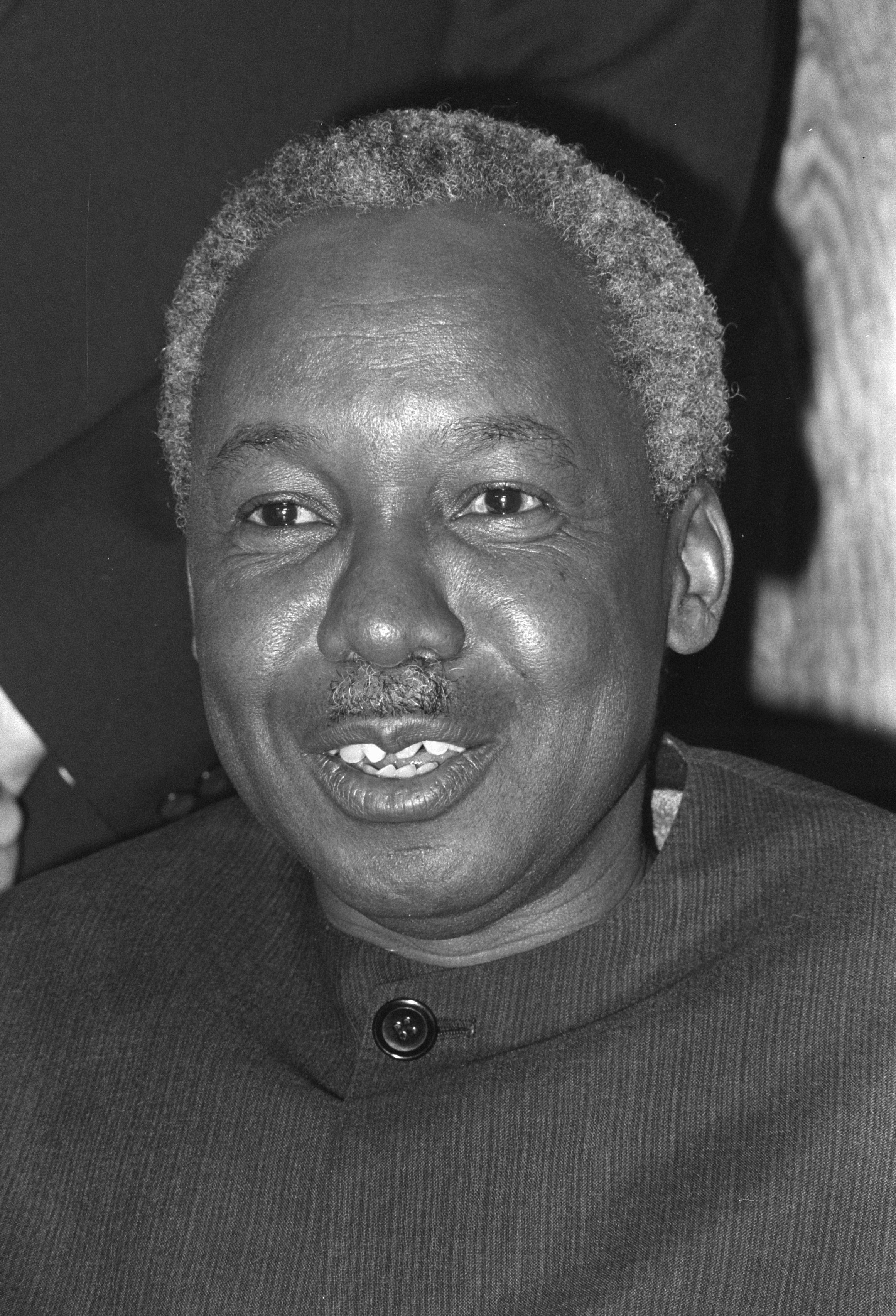
Julius Nyerere, Tanzania’s founding president and one of the most influential figures of the African independence era, died on October 14, 1999, at a London hospital, at age 77, following treatment for leukemia. Tributes poured in from across Africa and beyond, reflecting a stature that extended well past Tanzania’s borders: Nyerere had led Tanganyika to independence in 1961, become the first president of the united Tanzania in 1964, and, unusually for a founding leader of his generation, voluntarily stepped down from the presidency in 1985 rather than governing until death or overthrow.
Nyerere’s influence on the wider continent rested heavily on the role he played in the 1970s as one of the leading figures among the so-called Frontline States, a coalition of independent southern and eastern African nations, including Zambia, Botswana, Mozambique, and later Angola, that coordinated diplomatic and material support for liberation movements still fighting colonial or white-minority rule in Rhodesia, Namibia, and South Africa. Tanzania hosted the Organisation of African Unity’s Liberation Committee in Dar es Salaam and gave sanctuary and training grounds to groups including the African National Congress, the Pan Africanist Congress, Mozambique’s FRELIMO, and Zimbabwean nationalist movements, making Nyerere’s government one of the most consequential state backers of armed and political resistance to settler rule anywhere on the continent.
That role put Nyerere in direct, repeated contact with U.S. Secretary of State Henry Kissinger during 1976, when Kissinger undertook a high-profile diplomatic push, often called his southern Africa “shuttle,” aimed at pressuring Rhodesia’s white-minority government to accept a transition to Black majority rule while also addressing Namibian independence. Kissinger met with Nyerere in Dar es Salaam on multiple occasions that year, including sessions in April and September where they discussed strategy on Rhodesia and Namibia, and Nyerere in turn convened a September 1976 conference of Frontline States leaders in Dar es Salaam to coordinate their response to Kissinger’s proposals. The precise wording of any private exchange between the two men on Kissinger’s broader Cold War aim of, in his own phrase, curbing what U.S. officials saw as the “radicalization” of African liberation politics is not reliably documented in the public record, and specific quotations attributed to that exchange should be treated with caution. What is well established, through declassified State Department cables from the period, is that Nyerere approached the negotiations as a skeptical but pragmatic broker, willing to pressure guerrilla movements toward a negotiated settlement, while remaining deeply wary of any American or British framework that might preserve white-minority advantages in a nominally independent Zimbabwe.
Kissinger’s 1976 initiative did not immediately succeed: Rhodesia’s transition to independent Zimbabwe took another four years and a further round of negotiations, culminating in the 1979 Lancaster House Agreement. But Nyerere’s role in that period cemented his reputation as one of the era’s most consequential African statesmen, a legacy that endures alongside his domestic record as the architect of Ujamaa, Tanzania’s distinctive experiment in African socialism.
Sources
- South African History Online — Former Tanzanian President Julius Nyerere dies
- U.S. Department of State, Office of the Historian — Foreign Relations of the United States, 1969-1976, Volume XXVIII, Southern Africa
- Harvard Kennedy School — Henry Kissinger and Negotiating Black Majority Rule in Southern Africa
- Britannica — Julius Nyerere, biography and legacy
- CBS News — Nyerere: Africa's Teacher Dies
Books & Further Reading
Paul Bjerk, Julius Nyerere (Ohio Short Histories of Africa, Ohio University Press, ISBN 9780821422601)
Also posted once more between 2022 and 2018.