Published
Haiti's Independence Debt and the US Occupation of 1915-1934
Haiti’s modern poverty is often discussed as though it were simply a fact of nature. It is not. Two documented episodes of foreign extraction, a punitive debt imposed by France in 1825 and a nineteen-year American military occupation beginning in 1915, sit at the center of how historians explain the gap between Haiti’s revolutionary founding and its later economic hardship, even as researchers still argue over exactly how large the damage was.
In 1825, twenty-one years after Haiti’s 1804 declaration of independence, King Charles X of France sent a fleet of warships to the Haitian coast and demanded payment for the “loss” of France’s former colony: compensation to French planters for the enslaved people and property they had lost when Haiti’s revolution succeeded. Under threat of renewed war and blockade, Haitian President Jean-Pierre Boyer agreed to an indemnity of 150 million gold francs, payable in five annual installments, formalized by royal ordinance on April 17, 1825. The sum vastly exceeded the young nation’s annual revenue, forcing Haiti to borrow from French banks at steep interest just to make the first payments, a structure historians describe as a “double debt,” since Haiti was paying both France directly and interest to the French bankers who financed those payments. After Haiti defaulted, France sent warships again in 1838 and renegotiated the remaining balance down to 60 million francs, payable over thirty years. Records assembled by The New York Times in a 2022 investigation, “The Ransom,” show Haiti continued servicing loans connected to the original indemnity until 1947, some 122 years after it was first imposed.
Quantifying what this cost Haiti in today’s terms is contested, and estimates vary widely depending on method. The Times investigation calculated that the roughly 112 million francs actually paid, worth about $560 million when directly converted to 2022 dollars, would have added at least $21 billion to Haiti’s economy had it stayed invested domestically instead, a figure built on assumptions about compounding growth over two centuries that other economists have projected as high as $115 billion, or, in economist Thomas Piketty’s separate calculation, a minimum of $28 billion in reparations owed. None of these figures is an audited, agreed-upon sum; they are different modeling exercises answering slightly different questions, and should be read as illustrative estimates of a genuine and well-documented financial injustice rather than a single settled number.
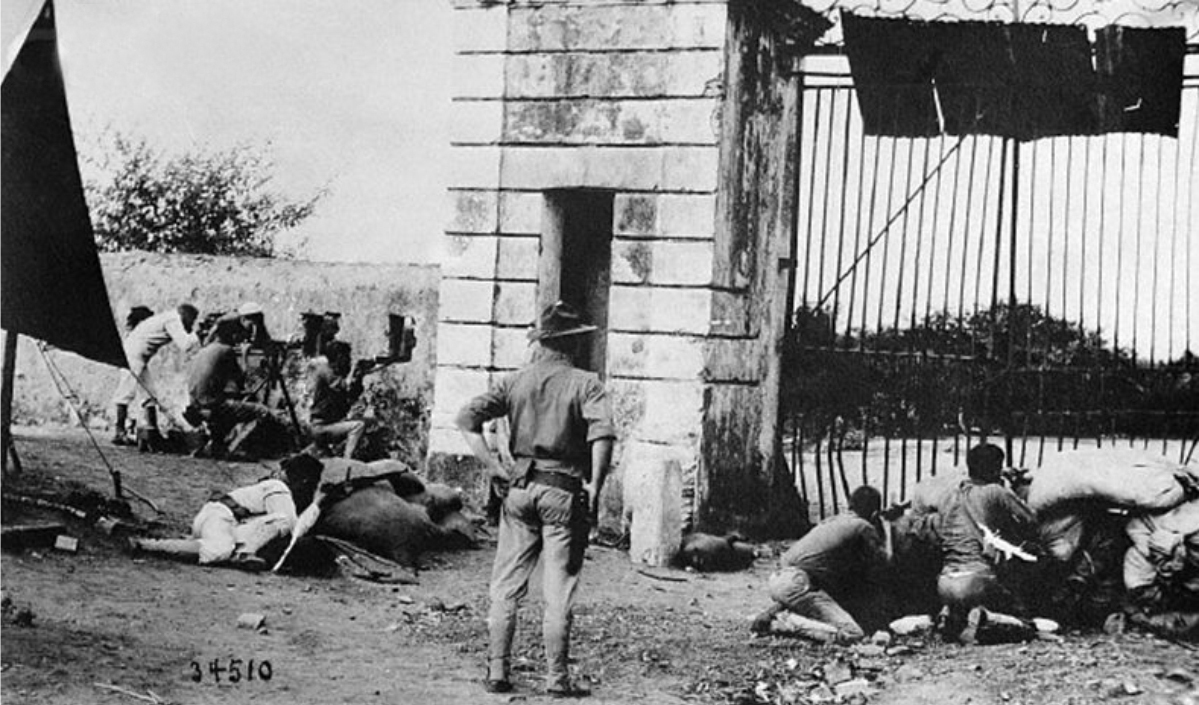
The second episode began on July 28, 1915, when United States Marines landed in Port-au-Prince after the lynching of President Vilbrun Guillaume Sam, amid broader U.S. concern about political instability, German commercial influence, and American banking interests, since National City Bank of New York was maneuvering to control Haiti’s national bank. The occupation that followed lasted until August 1934. American authorities took direct control of Haiti’s customs houses and treasury, at one point directing roughly 40 percent of national revenue toward debt service, dissolved the Haitian legislature when it refused to approve a US-drafted constitution, and imposed a forced-labor system called the corvée to build roads, which fueled two armed uprisings by rural fighters known as cacos: the first in 1915, the second and larger led by Charlemagne Péralte from 1918 to 1920, drawing in tens of thousands of fighters before US forces killed Péralte and suppressed the revolt.
The number of Haitians killed during the occupation is genuinely disputed rather than settled. A US Senate inquiry in the 1920s cited figures in the range of 2,250 to 3,250 deaths tied to the Caco conflicts specifically. Haitian historian Roger Gaillard, working from a wider base of sources decades later, put total deaths (combatants, forced-labor conscripts, and civilians combined) at a minimum of 15,000, a figure widely repeated in later accounts but not independently verified by contemporaneous record-keeping, since US and Haitian authorities kept no comprehensive count of rural casualties. The honest historical position is a range, not a single number: contemporary official counts in the low thousands, and later historical reconstructions suggesting a toll five to seven times higher. What is not disputed is that the occupation ended only in 1934, under Franklin Roosevelt’s “Good Neighbor” policy, while American financial oversight of Haiti’s finances persisted for over a decade after the last Marines departed, a second generation of externally controlled Haitian revenue layered directly on top of the debt payments still being made from the first.
Sources
Books & Further Reading
Hans Schmidt, The United States Occupation of Haiti, 1915-1934 (Rutgers University Press, ISBN 9780813522036)