Published
The Toppling of the Edward Colston Statue in Bristol

On the afternoon of June 7, 2020, during a Black Lives Matter march through Bristol sparked by the killing of George Floyd in Minneapolis, demonstrators looped ropes around a bronze statue of the merchant Edward Colston, hauled it from its plinth, and rolled it roughly 500 meters through the streets to Bristol Harbour, where it was pushed into the water. The statue, erected in 1895 by sculptor John Cassidy, had stood in the city center for 125 years, commemorating Colston as a philanthropist whose donations built schools, almshouses, and hospitals across Bristol. What the plaque omitted was the source of his fortune.
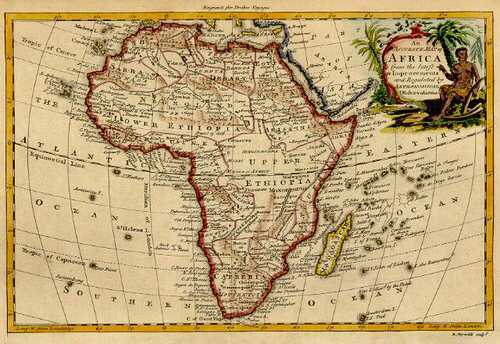
From 1680 to 1692, Colston was a senior official of the Royal African Company, the London-based enterprise that held a Crown-chartered monopoly on English trade along West Africa’s coast, including its trade in enslaved people. He served as deputy governor from 1689 to 1690, under the company’s governor, the Duke of York (later King James II). Historical research, most thoroughly documented in a 1920s study by Bristol vicar H.J. Wilkins and expanded by later historians, estimates that during Colston’s active involvement, RAC ships transported roughly 84,000 enslaved African men, women, and children across the Atlantic, including some 12,000 children. Conditions aboard were lethal even by the standards of the slave trade: an estimated 19,000 of those captives, nearly one in four, died during the crossing, their bodies thrown overboard. In his later years Colston also invested heavily in the South Sea Company, another slaving concern, which transported close to 16,000 more captives during his involvement with it. None of this appeared on the statue’s inscription, which for over a century described him simply as “one of the most virtuous and wise sons” of Bristol.
Calls to remove or recontextualize the statue had circulated in Bristol for more than three decades before 2020, without result. After protesters toppled it, the statue was recovered from the harbor four days later and, following restoration work that preserved the graffiti and rope marks from the day of its fall, went on permanent display lying on its side at Bristol’s M Shed museum in June 2021, presented not as a monument but as an artifact of the protest itself.
Four of the protesters, Rhian Graham, Milo Ponsford, Jake Skuse, and Sage Willoughby, who became known as the “Colston Four,” were charged with criminal damage. At their trial in Bristol Crown Court, they acknowledged pulling down the statue but argued their actions were not criminal, framing the monument itself as an affront to the city’s Black residents that officials had refused to address through legitimate channels. On January 5, 2022, after roughly three hours of deliberation, a jury acquitted all four, a verdict met with cheers from a packed public gallery and sharp criticism from government ministers who called it “worrying” and set a troubling precedent for the rule of law. The empty plinth where Colston’s statue once stood remains a contested civic space in Bristol, periodically used for temporary artworks, while the statue itself lies horizontal in a museum, a monument transformed into evidence.
Sources
Books & Further Reading
Marjorie Trusted and Joanna Barnes (eds.), Toppling Statues (Public Statues and Sculpture Association, 2021), containing Helen Paul's chapter "The Colston Cult and the Material Culture of Bristol"