Published
Che Guevara's Failed 1965 Congo Expedition
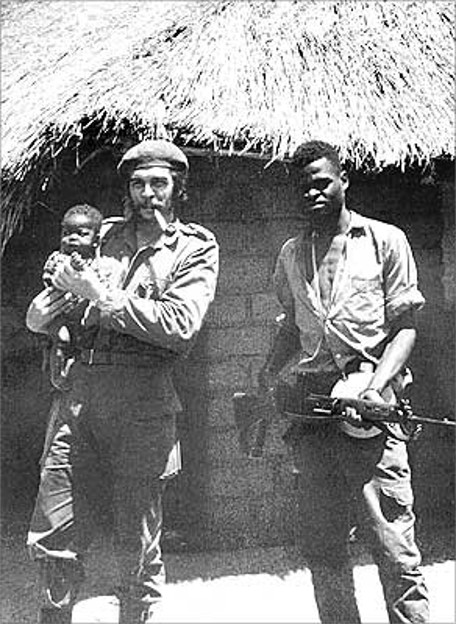
In April 1965, Che Guevara left Cuba on a secret mission to eastern Congo, intending to help sustain the Simba rebellion, a loose coalition of insurgents fighting the Congolese central government that had emerged in the chaos following the 1960 ouster and 1961 killing of the country’s first elected prime minister, Patrice Lumumba. Guevara arrived with a force of roughly 100 to 130 Cuban volunteers, deliberately selected, at his direction, to be Black or mixed-race Cubans so they would be less conspicuous fighting alongside Congolese rebels; his second-in-command, Víctor Dreke, led the recruitment. Guevara himself operated for months under a false identity, publicly unacknowledged by the Cuban government, as he tried to train and organize Simba forces from a base near Lake Tanganyika.
The mission’s central Congolese ally was Laurent-Désiré Kabila, who led one faction of the fragmented Simba movement and who decades later would himself become president of the country. Guevara’s assessment of Kabila, recorded in the diary he kept of the campaign, was harshly critical: he judged Kabila to have some genuine qualities of leadership but to lack seriousness and discipline, and noted that Kabila was frequently absent from the front, reportedly spending much of his time away from combat rather than commanding his forces. The broader Simba fighting force proved similarly unreliable in Guevara’s account, poorly trained, prone to fleeing under fire, and reliant on ritual practices its fighters believed would protect them from bullets rather than on conventional military discipline.
Guevara’s small Cuban contingent tried to compensate by training Congolese fighters and engaging directly in combat, but the political and military situation deteriorated steadily through 1965. Government forces, aided by Belgian-led mercenary units and Central Intelligence Agency support, steadily reclaimed rebel-held territory and cut off the routes across Lake Tanganyika that supplied Guevara’s operation from Tanzania. In October, Cuban leader Fidel Castro publicly read a farewell letter Guevara had written before leaving Cuba, effectively announcing that Guevara had renounced his Cuban government posts and citizenship, a disclosure Guevara had not authorized at that time and one that complicated his position further. By November, with supply lines severed and his own Congolese allies unwilling to keep fighting, Guevara concluded the mission was lost. He and his surviving men evacuated across Lake Tanganyika into Tanzania around November 20 to 21, 1965, ending a campaign of roughly seven months. Guevara later described the episode bluntly in his own writing as the history of a failure, and went on, within about a year, to Bolivia, where he was captured and killed in 1967.
Books & Further Reading
Ernesto "Che" Guevara, The African Dream: The Diaries of the Revolutionary War in the Congo (Grove Press, English trans. 2001, ISBN 9780802138347)