Published
The Battle of Isandlwana, 1879: The Zulu Kingdom's Victory Over the British
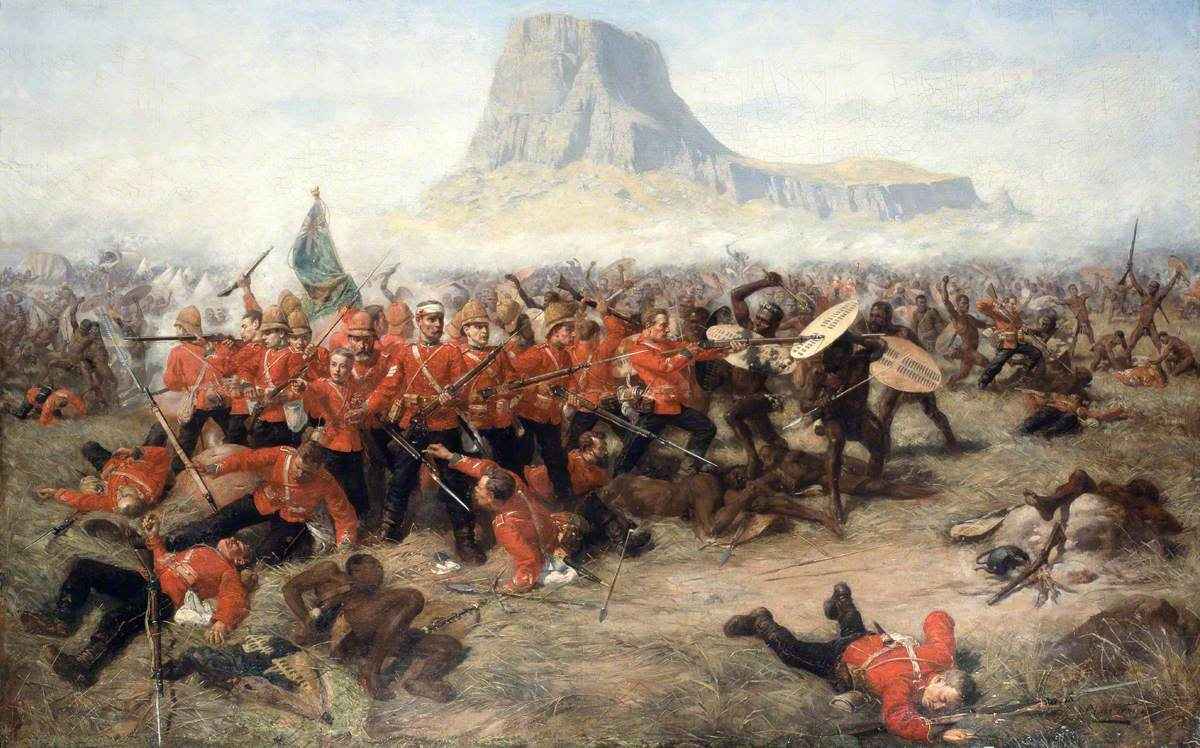
On January 22, 1879, a Zulu army destroyed a British camp at the foot of Isandlwana, a distinctively shaped hill in Zululand (in modern KwaZulu-Natal, South Africa), in what became the opening battle of the Anglo-Zulu War and one of the heaviest defeats a colonial army suffered anywhere in Africa during the 19th century.
The war began when Sir Bartle Frere, British high commissioner for South Africa, issued Zulu king Cetshwayo kaMpande an ultimatum he could not accept, one that effectively demanded the dissolution of the Zulu military system, as a pretext to invade Zululand. Lord Chelmsford led a British invasion force across the border in three columns in January 1879. The central column made camp near Isandlwana without entrenching or forming a defensive laager of wagons, a decision that later drew heavy criticism, and Chelmsford split his force further to search for the Zulu army, leaving roughly 1,700 to 1,800 British, colonial, and African auxiliary troops in camp.
They were not hard to find. A Zulu force estimated at between 20,000 and 25,000 warriors (sources vary on the precise figure) had massed nearby under the field command of the induna (general) Ntshingwayo kaMahole Khoza, acting on Cetshwayo’s orders. Cetshwayo directed the campaign from his capital, Ulundi, but did not personally lead the impi into battle; command in the field belonged to Ntshingwayo and his co-commander Mavumengwana kaNdlela Ntuli. Discovered by a British reconnaissance patrol around midday on January 22, the Zulu regiments launched a rapid, coordinated assault using the classic “horns of the buffalo” encirclement formation, closing around the thinly stretched British firing line before it could consolidate.
The camp fell within a few hours. British and colonial troops, strung out in an overextended defensive line and hampered by ammunition supply problems, were overwhelmed in close combat. Casualty figures vary by source, but the British side lost well over 1,000 men (estimates commonly cited run above 1,300 dead, including more than 50 officers), while Zulu losses are usually put at over 1,000 killed, with some estimates reaching several thousand given the intensity of the fighting.
The defeat shocked Victorian Britain, where colonial wars against poorly armed African forces were assumed to be low-risk affairs. It forced a change in British tactics, as subsequent columns adopted entrenched camps and defensive squares, and prompted a hurried escalation of the war effort. The following day, a much smaller garrison at Rorke’s Drift repelled a separate Zulu assault, an action that would later overshadow Isandlwana in British popular memory even though it was Isandlwana, not Rorke’s Drift, that represented the true scale of the Zulu kingdom’s military capability. The British ultimately won the war by July 1879, capturing and exiling Cetshwayo and dismantling the Zulu kingdom’s independence, but Isandlwana remains a defining demonstration that Zulu forces could, under the right conditions, defeat a modern European army in open battle.
Sources
Books & Further Reading
Ian Knight, Zulu Rising: The Epic Story of iSandlwana and Rorke's Drift (Macmillan, 2010, ISBN 9781405091855)