Published
Abram Gannibal: The African General Behind Russia's Greatest Poet
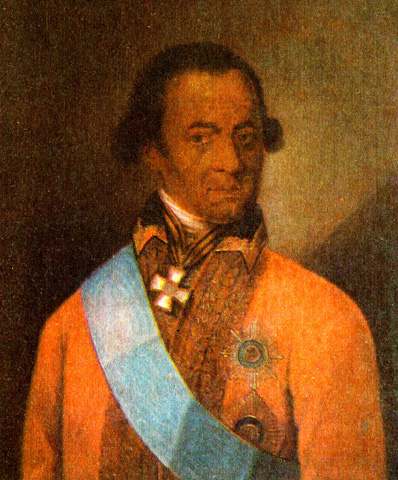
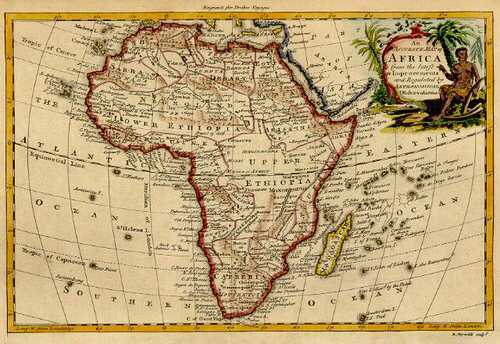
Abram Petrovich Gannibal was born around 1696 somewhere in Central Africa, most likely, according to research by the French-Beninese historian Dieudonne Gnammankou, near Logone-Birni in what is now northern Cameroon, close to Lake Chad. His exact origin has never been settled beyond dispute; Ethiopia and Eritrea have also been proposed by various historians reading his own scattered later references to his homeland, and Gannibal himself, writing decades later as an old man in Russia, left conflicting and imprecise clues about where he came from. What is not disputed is what happened next: as a young child, by his own later account around age seven, he was captured, separated from his family, and transported north through the Ottoman Empire to Constantinople, where he was held for a period in the household of Sultan Ahmed III before Russia’s ambassador in the city, Sava Vladislavich, acquired him, reportedly through a bribe, around 1704.
Vladislavich brought the boy to Russia as a gift for Tsar Peter the Great, who took an immediate personal interest in him. Peter had the boy baptized in 1705, standing as his own godfather, and gave him the surname Gannibal, evoking the Carthaginian general Hannibal, along with the patronymic Petrovich, “son of Peter,” a mark of the tsar’s personal attachment. Gannibal grew up close to the Russian court, serving for years as Peter’s valet and accompanying him on military campaigns, before the tsar sent him to France to study military engineering and artillery at the academy in La Fere. He served briefly in the French army during the War of the Quadruple Alliance before returning to Russia, where his career, interrupted for a period after Peter’s death in 1725 by court rivals who had him posted to a remote Siberian frontier fortress, eventually recovered under Empress Elizabeth. He rose steadily through Russia’s military engineering corps, reaching the rank of chief military engineer of the Russian army in 1756 and being promoted to general-in-chief, one of the empire’s highest military ranks, in 1759. He also received substantial land grants and serfs from the crown, becoming a wealthy nobleman in his own right before his death in 1781.
Gannibal’s most famous legacy runs through his descendants rather than his own considerable career. His son Osip Abramovich Gannibal had a daughter, Nadezhda, who married Sergei Lvovich Pushkin, and their son, born in 1799, was Alexander Sergeyevich Pushkin, widely regarded as the founder of modern Russian literature and the country’s most celebrated poet. Pushkin was proud of his African great-grandfather rather than embarrassed by him, and began an unfinished historical novel, “The Moor of Peter the Great,” fictionalizing Gannibal’s life and rise at the Russian court; the work remained incomplete at Pushkin’s death in 1837 but has been mined by historians and later Soviet-era biographers as one of the few literary treatments of Gannibal’s story from within his own family.
Gannibal’s biography has attracted renewed attention in recent decades, both from historians tracing the wider and often overlooked history of Africans and their descendants in imperial Russia, and from journalistic accounts highlighting how a story combining enslavement, adoption into European nobility, and descent into one of world literature’s most towering figures had gone relatively unexamined outside specialist Russian and African studies circles for so long. His life remains one of the more striking examples of an African-born figure rising to the highest ranks of a European imperial state during the era of the transatlantic and trans-Saharan slave trades, and of the disputed, fragmentary record that so often surrounds such figures once they are pulled out of family legend and subjected to modern historical scrutiny.
Sources
Books & Further Reading
Hugh Barnes, Gannibal: The Moor of Petersburg (Profile Books, 2005, ISBN 9781861973658; US edition titled The Stolen Prince, Ecco, 2006)